Book Notes | Greek and Roman Art by Susan Woodford
On iteration, art, and a brief moment in history

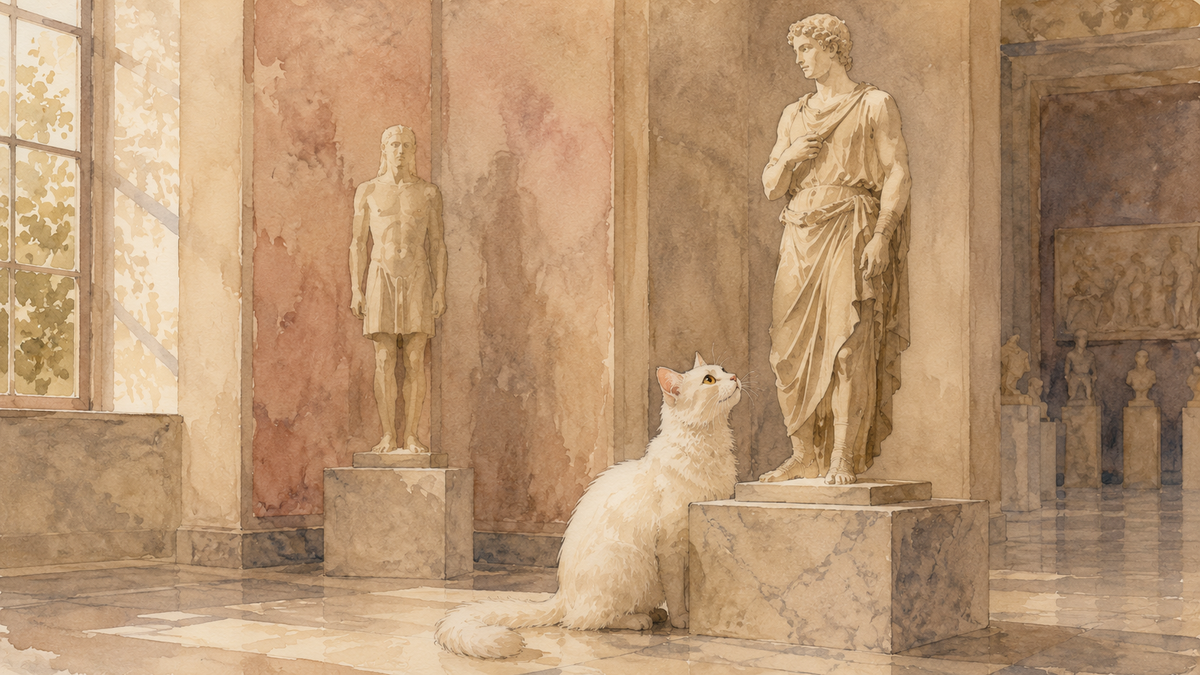
One of my resolutions for 2026 was to write more and to read good books well.
That was the resolution I had in mind for the book Greek and Roman Art by Susan Woodford, which I picked up in the National Archaeological Museum of Naples (MANN).
This is just a short sharing of the part that stood out the most to me.
From Egypt to Greece: early statues and risk-taking
The Greeks were impressed by Egyptian statues and began carving their own figures.
Early Greek statues, such as the New York Kouros (c. 590–580 BCE), closely resembled Egyptian forms, such as in their rigid stance and frontal orientation, according to Woodford.
Within a century, by c. 530 BCE, the Kroisos Kouros from Anavyssos showed clear advances, but it appeared unnaturally rigid.
Sculptors then continued refining their craft, as seen through the Aristodikos Kouros (c. 510–500 BCE).
A century of innovation to the Kritios Boy
About a century of artistic evolution, with all its blood, sweat, and tears, is compressed into just a few pages of the book.
The pursuit of naturalism progressed to experimentation with pose. By c. 480 BCE, the Kritios Boy shows a more natural stance, marking a clear and early use of contrapposto.
Statue carving was risky. A wrong move or a failed experiment would waste expensive marble.
“Each problem led to a solution on a higher level of complexity.”
Woodford, Greek and Roman Art
Each advance must have felt like a triumphant payoff from effort and risk.
Here was a lesson on “innovation” for me.
Reading the book led me to reflect that initiatives, no matter how well considered, could create new and unexpected problems.
It was my reminder not to aim for error-free advancement; Greek sculptors could not achieve it. Iterations drive progress, as seen in the gradual updates to technique and taste, that led to developments such as contrapposto and more.
2000 years in the blink of an eye
I feel as though I have plunged forward in time. A quick walk to the Cappella Sansevero, which houses sculptures from the 1750s, brings me back into relatively modern perspective, some 2,000 years later. My favourite sculpture there is Il Disinganno by Francesco Queirolo, especially with its extraordinary marble net.
The sculptures reflect the outcome of technical change: numerous iterations give way to small advances, gradually resulting in more realistic works of art and, eventually, astonishing masterpieces.
Against a vast body of Greek and Roman artefacts, both signed and unsigned, I am reminded that I am a blip in human history.
If you enjoyed this short blog, you can also find a more detailed review here.