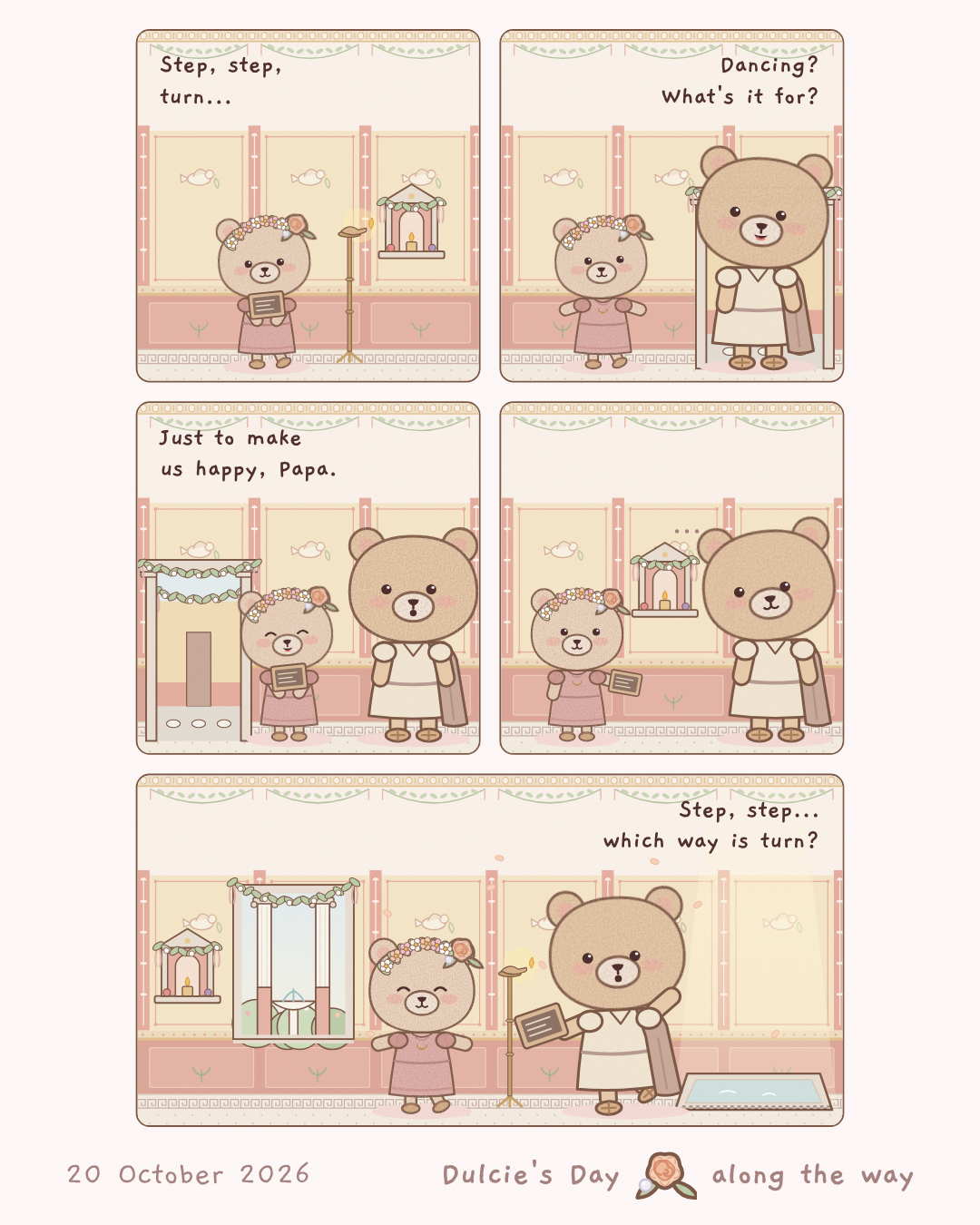
Just to make us happy, Papa. 🥰 A Dulcie's Day comic
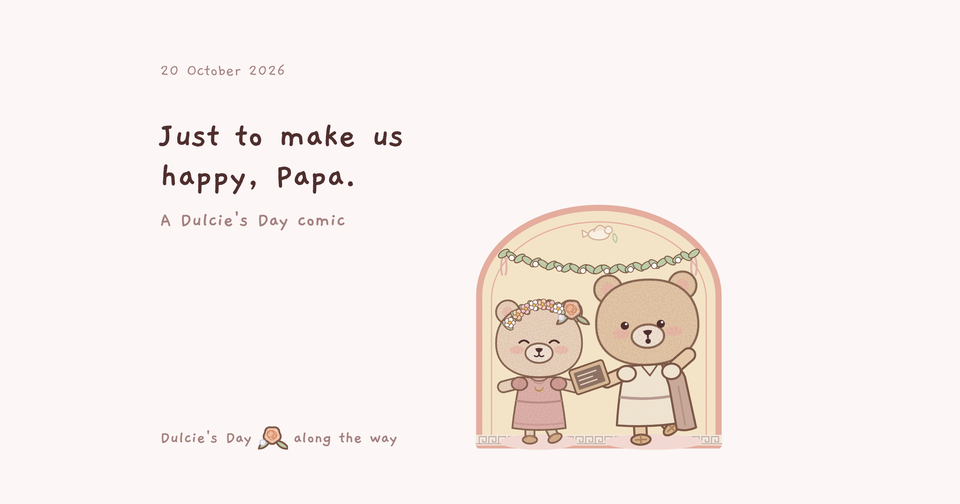
Dulcie practises her festival dance in Roman Pompeii. Papa asks what dancing is for, and her answer gets him dancing too.
Dulcie has written her dance steps on her wax tablet and is practising in the atrium. Papa wants to know what it's for. Once she tells him, he's dancing in the atrium too, squinting at her tablet.
Roman children practised writing on wooden tablets coated in wax. They scratched letters in with a stylus and smoothed the wax to start again. More than 150 tablets belonging to a Pompeii banker, Caecilius Iucundus, survived the eruption in his house.
Romans also wore flower wreaths at festivals. Dulcie's crescent pendant is a lunula, a charm Roman girls wore for protection.
The house is painted in the style Pompeii liked in its last years: ochre and red panels with small figures floating in the middle. The little shrine on the wall is the lararium, where the family left food, wine and incense for their household gods.
The atrium has a pool that caught rain through an opening in the roof, a bronze stand for oil lamps, and a view through columns to the garden.
Outside the door, the raised stones in the road are real. Pompeii's streets had stepping stones so people could cross without walking through mud and rubbish, and cart wheels passed in the gaps between them.