A Roman shopfront, two millennia on
From a Roman shop sign in Herculaneum to a modern photograph

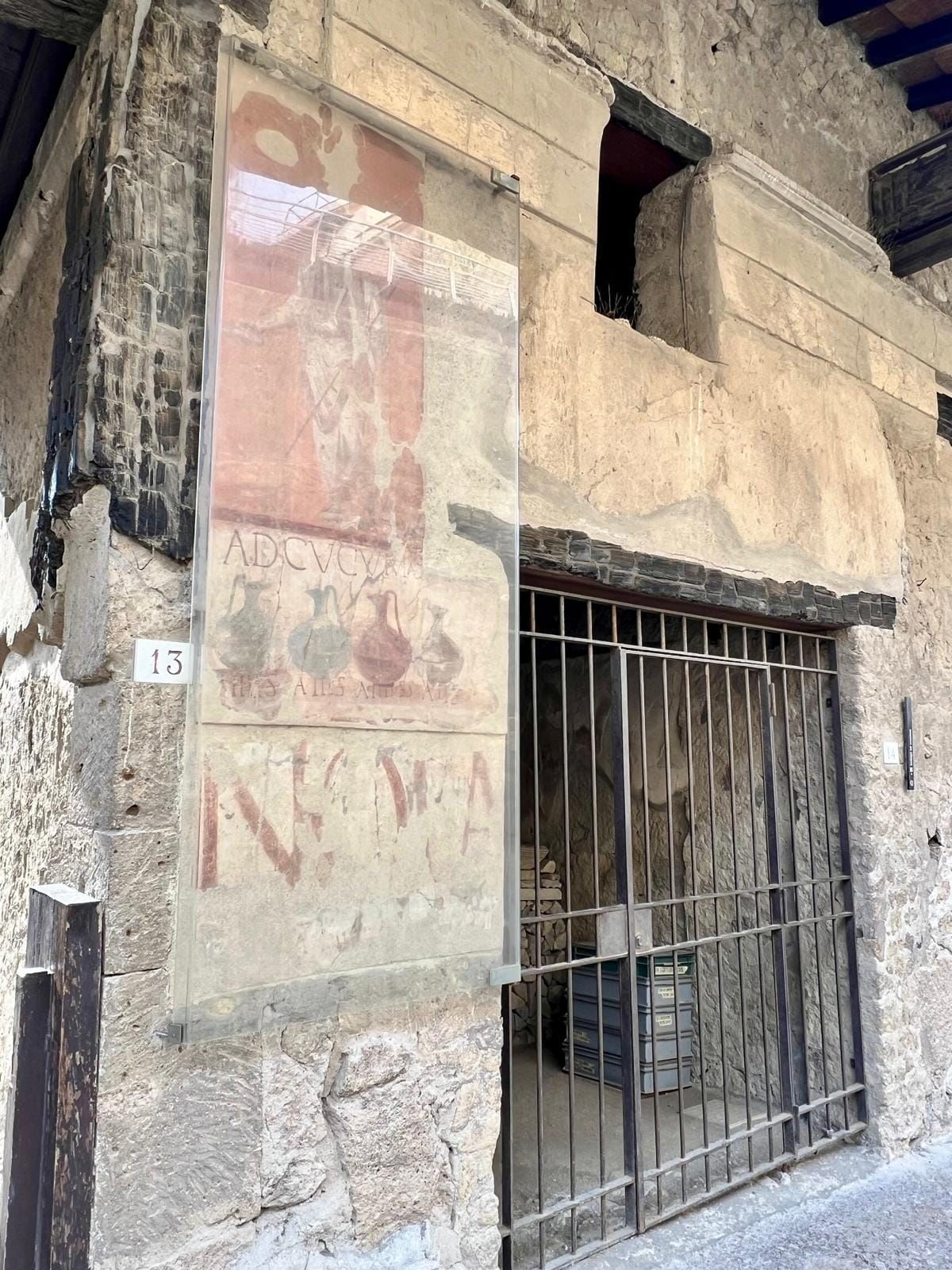
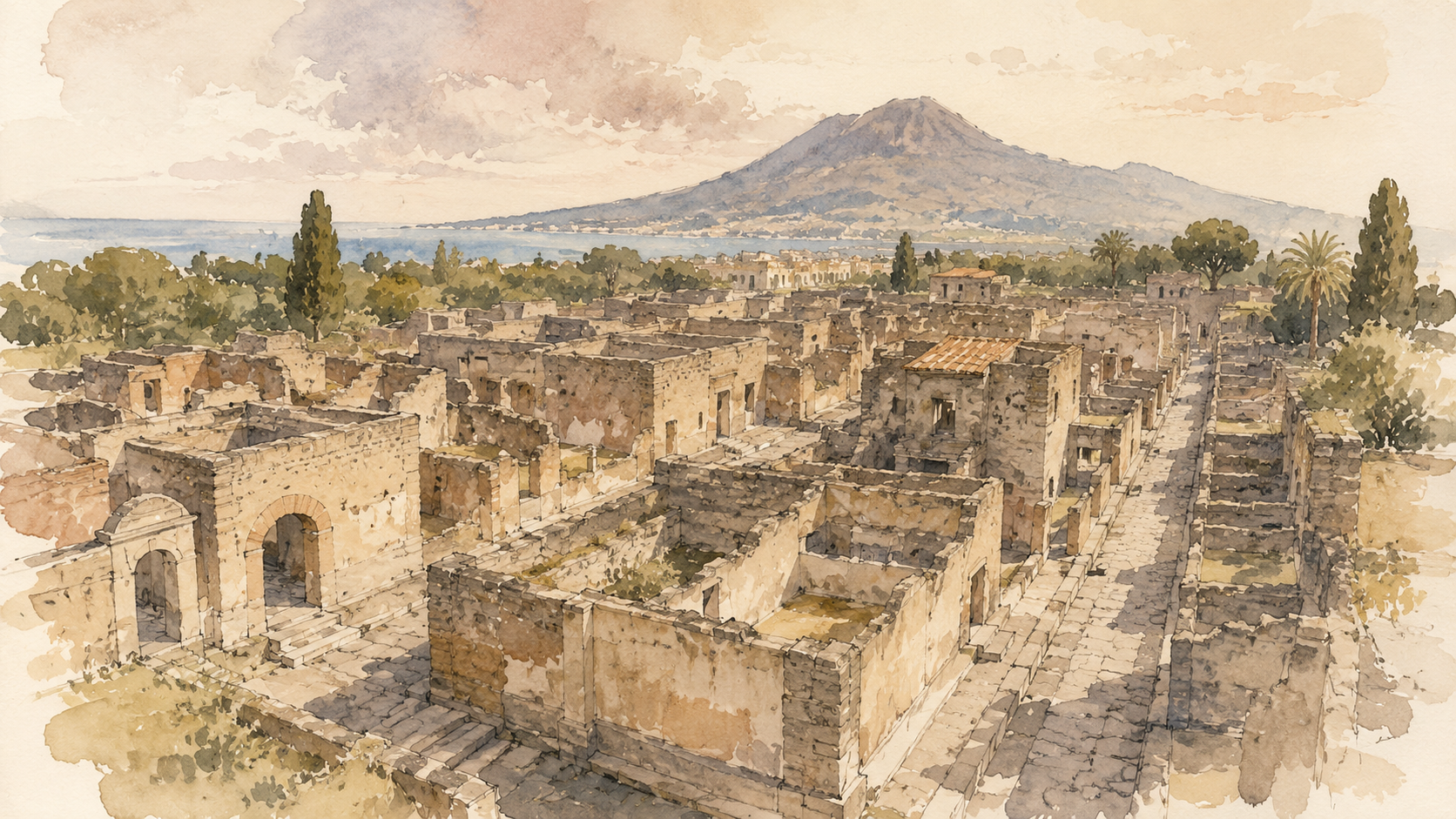
“Can you build a civilisation that will stand the test of time?”
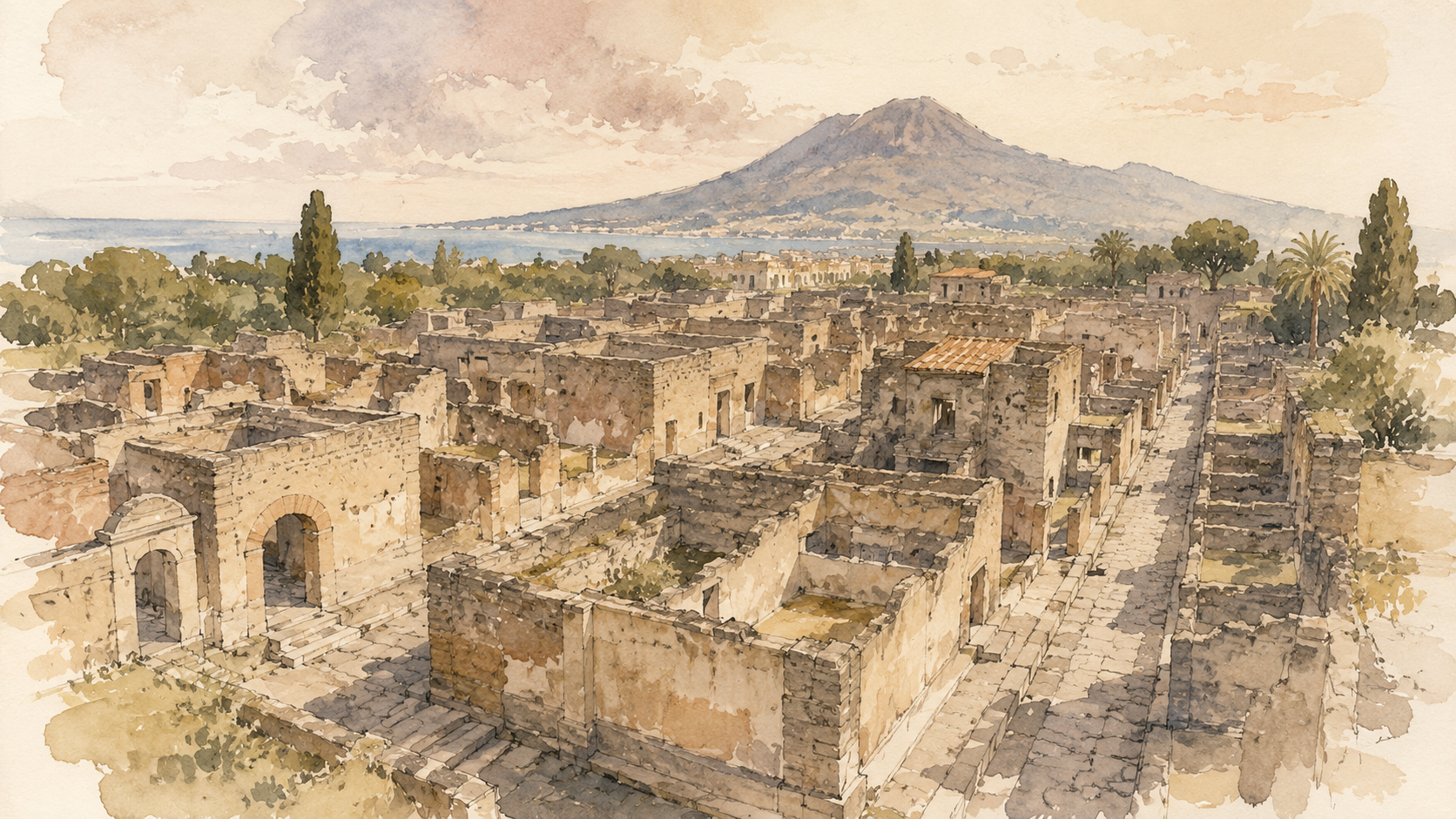
I was reminded of this line from the Civilisation games as I stood in Herculaneum before a first-century CE shop façade, preserved by the eruption of Vesuvius in AD 79.
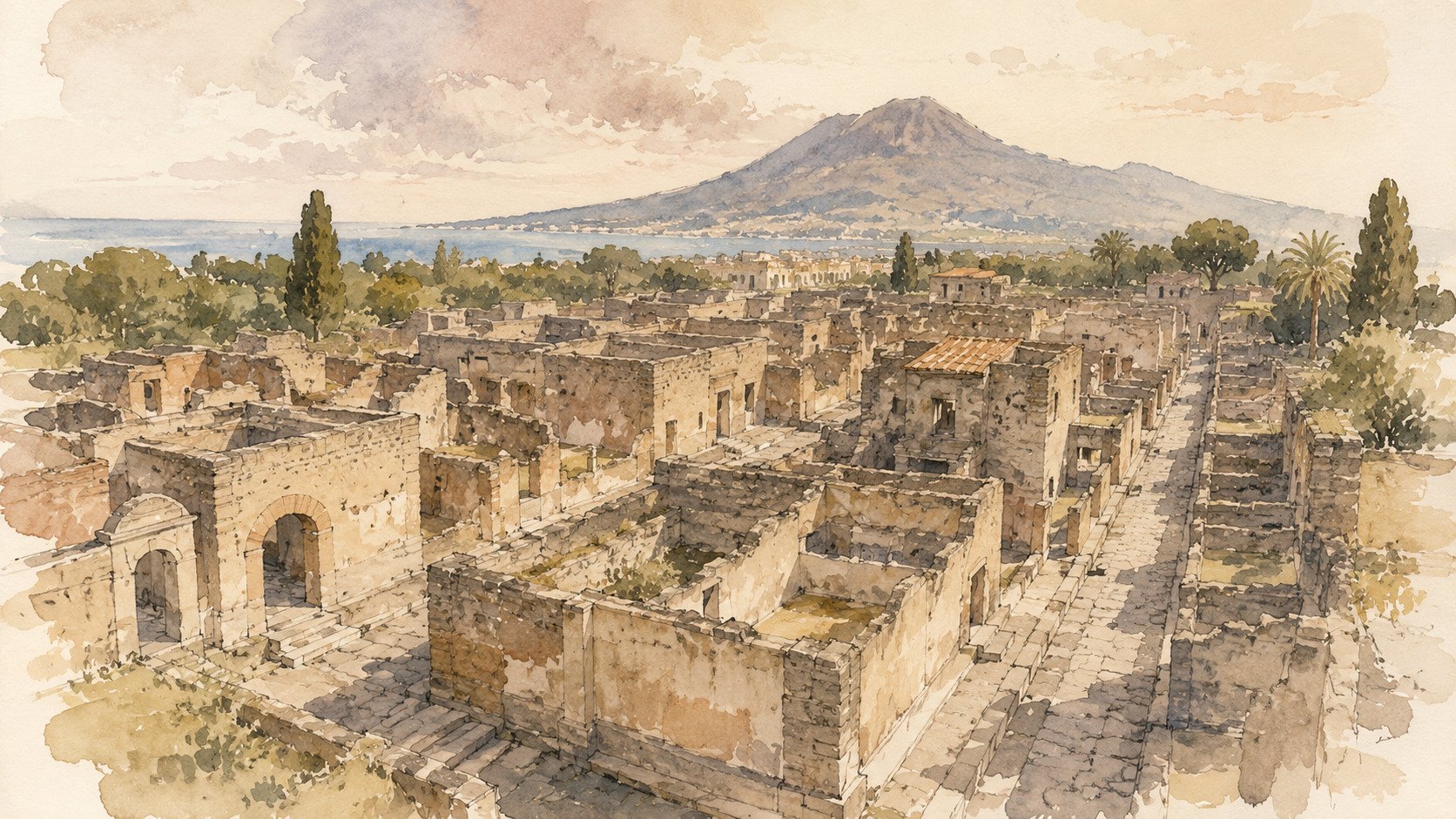
The premises once housed a small shop or bar selling food and drinks. What remains is an ordinary, practical signboard.
Much of what follows comes from our tour guide’s explanations and later online reading.
A deity of oaths
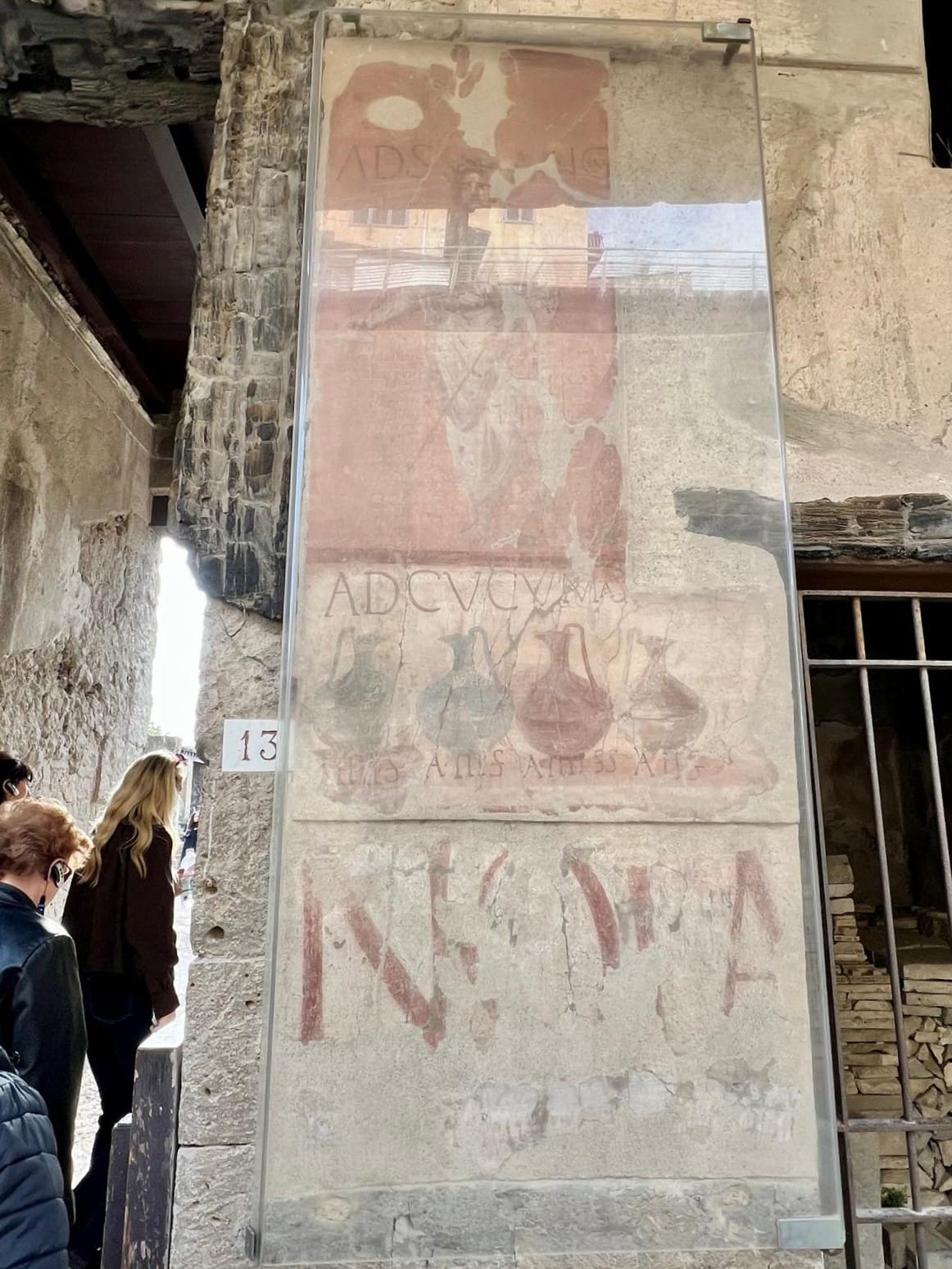
At the top of the shop sign is a painted figure. The words AD SANCVM ("ad Sancum") appear beside him. This figure has been interpreted as the god Semo Sancus, a deity of oaths and contracts.
This reminded me of Cai Shen Ye (the Deity of Prosperity) during Chinese New Year and of other deities invoked to watch over business and prosperity.
A drinks menu
Below the image of the deity is a painted sign showing four pitchers of differently coloured liquids, each labelled with a price.
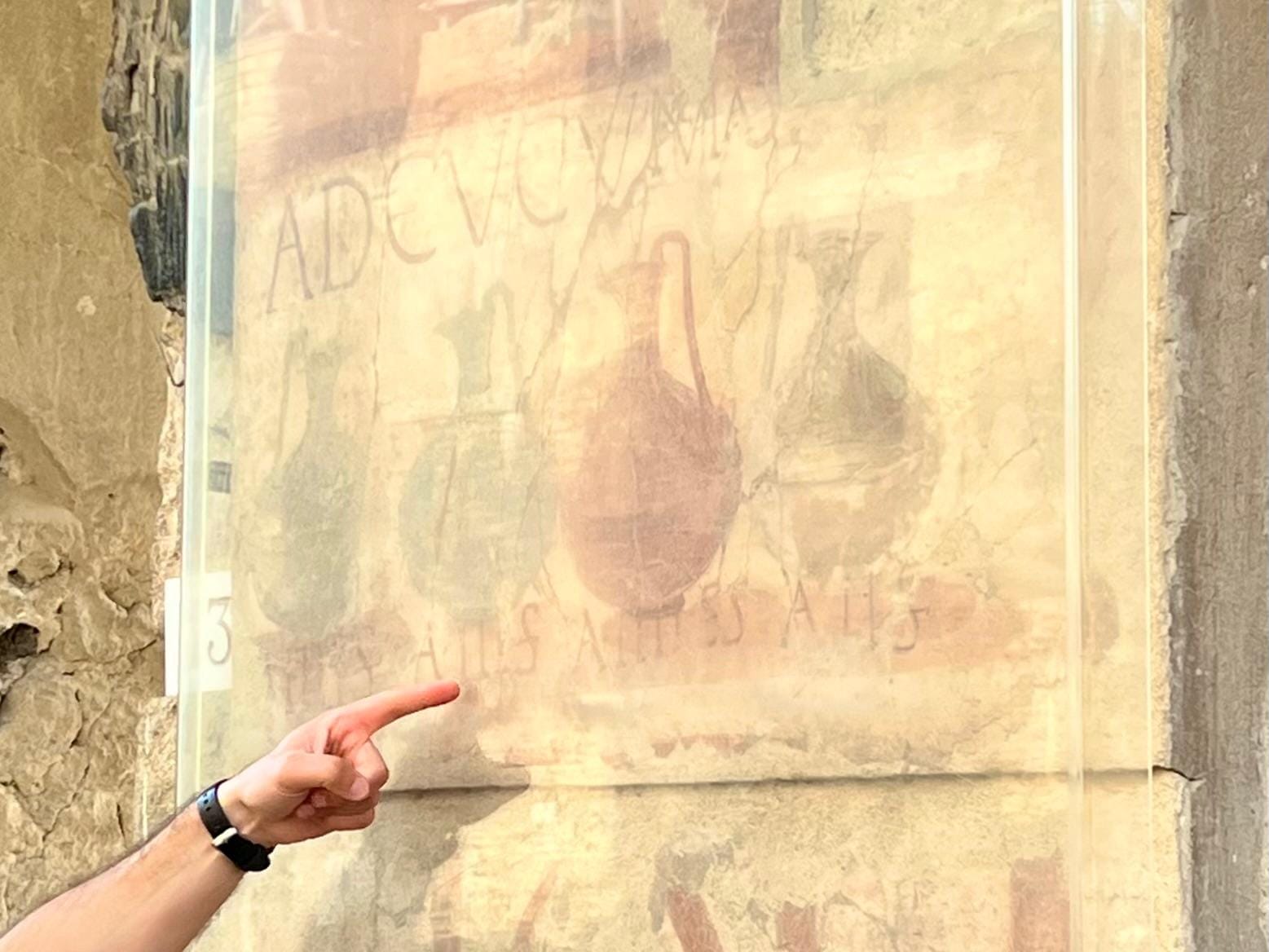
Our tour guide, Paolo, pointed out the “A”, denoting the Roman as, a bronze coin used in everyday trade. Sixteen asses equalled one denarius, roughly a day’s wage for a Roman soldier. Wine was an accessible purchase.
The words AD CVCVMAS (“at the cucumas (jugs or cauldron)”) appear above the jugs. The colour variation may have indicated differences in quality or quantity.
In Campania, wines ranged from simple local table wine to prestigious varieties such as Falernian, though this sign does not specify a particular vintage.
An advertisement for entertainment
Further down the same pilaster, the prominent graffiti NOLA is understood to announce a forthcoming gladiatorial spectacle in the nearby town of Nola.
The inscription has been attributed to Aprilis of Capua, a travelling scribe who moved between towns, inscribing notices of public entertainments and signing his work. In effect, he functioned as an early advertiser, leaving behind both message and attribution.
Civilisations two millennia apart
These traces of commercial life, preserved by the eruption, felt unexpectedly familiar: the deity, wine menu, and an advertisement.
I had been immersed in the daily lives of Romans in Pompeii and Herculaneum. The tour ended, and we took a bus back to Napoli, whose name derives from the Greek Neapolis, meaning “new city”.
At the Municipio station, a photograph by Mimmo Jodice caught my attention. It shows a hand raising the fractured head of Demetra, the Greek goddess of agriculture and fertility, from a marble statue discovered in Herculaneum and dating to the first century AD.
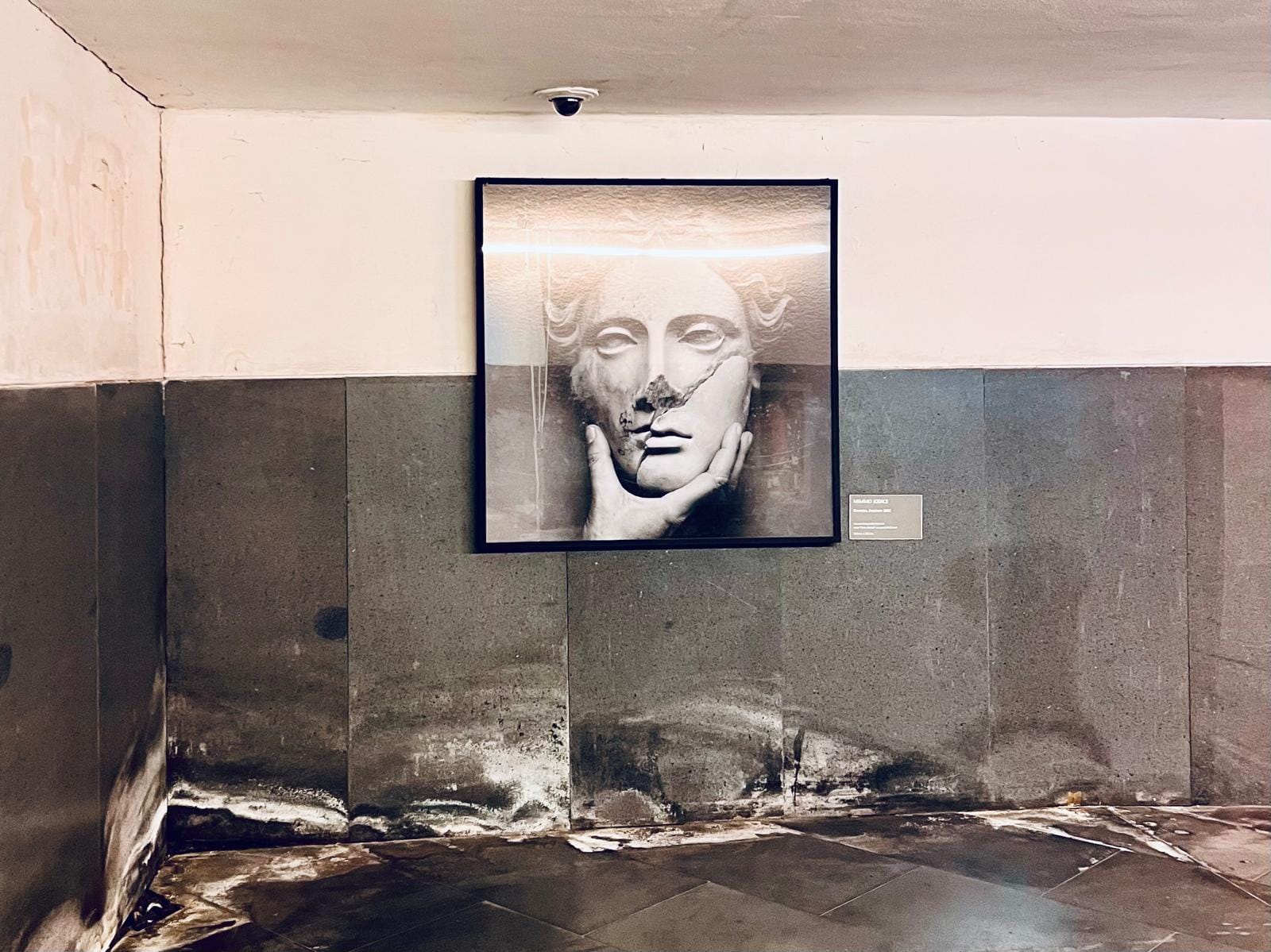
Seen in this contemporary setting, the ancient artefact felt suddenly distant: the sculptor and the viewer are separated by two millennia.
Demetra once stood for wheat and harvest. In the world around me, few people think about wheat; they think about wifi instead.
And yet, after immersing myself in Pompeii and Herculaneum that afternoon, the everyday workings of this shopfront felt less foreign than I had expected.
“Can you build a civilisation that will stand the test of time?”
Civilisation, from the Latin civis and civitas, rests less on the ambition of a single person than on shared life. What endures are the structures, practices, and habits that bind a society together.
All images © Pearl Lee, 2026.
Sources
Historical details of Herculaneum are drawn from our tour guide's explanations and the references below.
- Herculaneum.uk, Insula VI, 14 – Casa del Salone Nero.
https://herculaneum.uk/Ins%206/Herculaneum%206%2014.htm - Cooley, A. E. & Cooley, M. G. L. (2014). Pompeii and Herculaneum: A Sourcebook. London: Routledge, pp. 266–267 (H80; AE 1989, 182c).