What I've learned after ten years in the wild
What would you tell yourself ten years after graduation? Here’s what I’d tell my younger self and what I’m still figuring out.


In my first job, I used to picture what my CV would look like in six or seven years. It just felt like the point by which I’d know a lot more.
Suddenly, it’s been over ten years. Despite the ups and downs, I don’t feel like a different person inside, though I spend less time deleting exclamation marks in my emails.
Working life taught me that strong foundations still matter, and also that we need to respond to change. AI is changing how we work by making knowledge more accessible. But we need to develop skills or judgement through experience, learn to make humane decisions, and navigate trade-offs.
So I looked at my last ten years in the wild and reflected: how did I change, and what did I actually learn?
Here are some skills I believe will remain relevant and useful, no matter how powerful our tools become.
“It now falls to us to face the challenges of our time with clarity of thought and responsibility.”
— Pope Leo XIV, Magnifica Humanitas
Skill 1: Thinking well (Training discernment)
Over many delicious Hotbake 24/7 sandwiches in university, I learnt how to market products that already exist: positioning, pricing, distribution and promotion. But all of that assumes we need the product in the first place, such as shampoo.
That was the biggest shift for me after I graduated and started working in an increasingly tech-driven world. In some businesses, people don’t need or want the product yet. You first have to establish the need and find product-market fit.
In hindsight, then, a helpful thing I learnt in school wasn’t necessarily a specific practical skill, but the practice of thinking, especially through business case studies. We went through repeated sessions of sifting through information and presenting a cogent argument.
That trained us to think: what information matters, and why? The practice of figuring stuff out remains relevant, useful and enjoyable today.
Skill 2: Learning to sell
If I were leaving school now, I'd take a sales-related job first. I had avoided sales for years because I thought I was shy and assumed sales was for extroverts.
Inside sales turned out to be a good place for an introvert to build commercial skills, for reasons I hadn't anticipated. (But any kind of high-volume sales experience, with a well-defined process and objective, would be good.)
- Life skill: Learn to bring value to other people, fast.
- For beginners: There will probably be some sales-related training involved, such as research. You’re also there to sell, and the lead knows it. Failure is expected. It takes some of the fear away.
- Level up: You get far more reps learning BANT: budget, authority, need and timeline. You can pick it up quickly, then move on to longer-term relationship building.
- Level up again: Learn a related CRM properly. It teaches you what to document and look for when connecting with and qualifying a lead or account.
Skill 3: Articulating a problem
People used to say this, maybe ten years ago: “Don’t bring me problems, bring me solutions.” I’d also hear career advice about being “solutions-oriented”, because having answers makes you appear more competent.
The rule encourages people, especially junior staff, to think before escalating a problem. But taken too far, it can stop people from raising problems they can’t solve, even when those problems could be important. (Programmers describe a related mistake as the XY problem: focusing on a proposed solution instead of the underlying problem.)
What I would tell my past self today is: “Articulate the problem well.” It's better than being confidently wrong!
This also supports the OODA loop: observe, orient, decide, and act. And sometimes, a problem that looks complex is actually easy to solve. I talk it through and realise, “Actually, I know the answer.”
Other times, describing what seems like a simple problem reveals that it’s actually a symptom of something much deeper. That’s an opportunity to question assumptions, think critically, stay open to feedback and, when needed, reason from first principles.
Skill 4: Working hard
In my experience, hard work typically feels frustrating. Feeling frustration is a good thing, especially when it’s attached to a meaningful goal.
Hard work that develops skill takes effort and productive difficulty. It often happens at the edge of my competence and comfort, where I have to sit with frustration and work through it.
I learned this idea from Dr Becky’s concept of the “Learning Space”, that frustration tolerance is essential. That also means knowing when and how to recover.
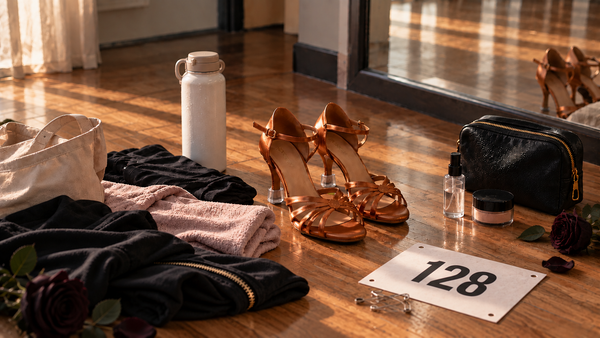
Dance is a good analogy: goals, technique, performance and recovery have to work together to produce the right movement, at the right time, with the quality and artistry.
Subskill: Get out there and collect the data
Articulating a problem well and thinking independently requires good material to think with. Good input in, good output out.
Usually, that means doing the homework, forming a hypothesis, and thinking carefully about the data you’re collecting. What does it actually represent? What might be missing? Does what you’ve learnt challenge what you know so far or change what you do next?
Tools can help us analyse what’s in front of us, but learning to ask better questions takes more. We still need to read, learn from experience, and keep developing our own judgement.
Subskill: Dealing with failure and disagreement
Anders Ericsson’s research on deliberate practice describes something similar: attempt something slightly beyond your ability, get feedback quickly, adjust, repeat.
What I didn’t expect was that while being intentional and paying attention were excellent traits, they also magnified the mental discomforts of learning and failure a hundredfold... Sufficient recovery and emotional regulation became just as important.
Have confidence and keep going. “I can” makes you try, and trying means taking the shot even if you miss. Roger Federer won only about 54% of the points he played after all.
Thinking for yourself, rather than relying entirely on a machine, also means being willing to disagree, and to be disagreed with. I’d tell myself: decide what matters and why, then stand by it with tact and respect. Be prepared to take responsibility for the consequences, come what may.
The decade outside work
Dear Pearl in 2015: you'll enjoy a lot of things outside of work too.
I did things I couldn't have imagined doing, and some things I never planned for turned out to be really good for me.
- Fitness: In 2022, I couldn't finish a single Pilates class. Now I enjoy exercising, and I can do an hour on the stair climber machine.
- Dance: In my 20s, I started taekwondo and stopped. It was worth the try. Then, I went back to dance.
- Music: I picked the guitar up and gave the violin a final good shake. I stopped. I'm happy to move on and focus on dance.
- I thought I could never learn a language, and I finished the whole Korean syllabus. I can now watch shows without subtitles and understand at least 75% of all conversations. Perhaps I’ll push through my ceiling one day.
Closing thoughts on AI today
There have been moments when I wondered about the future of the knowledge worker.
Today's AI tools remind me of something from Naruto that blew my mind as a teenager.
Team Guy had to fight copies of themselves that matched their strength. I couldn’t imagine how they were supposed to win. I remember feeling a strong sense of despair and impossibility.
The answer was to become stronger than the versions of themselves that had been copied.
I like thinking about AI that way too. We can use AI while still becoming better than the versions of ourselves and generate new knowledge and ideas.
AI can reflect an enormous amount of what we already know and speed up discovery and problem-solving, but I don’t think it always has the best answer. With patience and effort, I’ve had moments when AI seemed to have exhausted its suggestions, but I eventually thought of an answer that felt better and more intuitive.
What I want to practise over the next ten years
In the next decade, these are some ideas I want to put into practice.
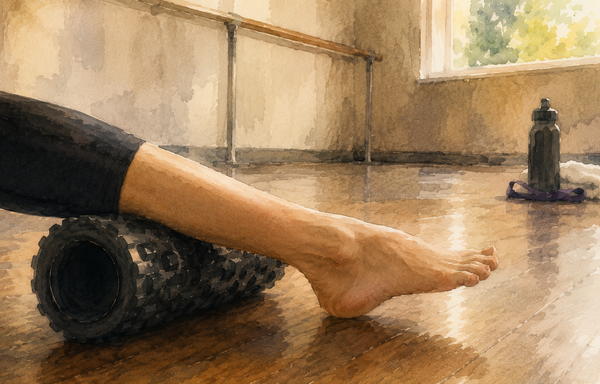
Spend time removing my nails. As my dance competency increased, I found that recovery and core strength mattered more. Instead of simply working around discomfort or feeling down, I can use that to tell me what needs attention and push me to address the underlying problem.
"So whatever your nail is, whatever you're afraid of, that's exactly where you should be focusing—because that is how you'll grow. To live at full power, take the nail out of your head." - Graham Weaver, Last Lecture
From now on, I’ll work on removing my life's nails instead of ignoring them, so I can move on to more complex challenges (which I find rewarding and fun) in the next stage of life.
Have a stronger locus of control. I cannot control every thought, circumstance or outcome. I can shape my attention, environment, habits and next actions, and be a good person to get along with.
One of the most powerful things about Nelson Mandela’s story is that, despite 27 years of profoundly unjust imprisonment, he maintained an extraordinary sense of agency. Invictus, a poem associated with Mandela, ends: “I am the master of my fate; I am the captain of my soul.”
It reminds me how fortunate I am to be free and to live in a time and place where I have opportunities. Even if things get tough, I have much to be grateful for and every reason to keep going.
Compounding is the only free lunch available. I picked that line up somewhere, so apologies to whoever wrote it. I mean the long-term return on things you keep doing and building on, whether it's foundations for a long career or fitness.
I’d like to organise my decisions around what matters most to my goals, commit to those choices, and use my time and attention well.
It also means saying no to some stuff. One thing I’ve said no to, at least for now, is music.
With limited time, I’d rather focus on dance and compound my training there. I don’t know how long I’ll have the same physical opportunities in dance, but I also know I’m giving up years I could spend building my skills in music.
Either way, there are trade-offs. I’ve made my choice with clarity, and I won’t dwell on future regrets.
Be more present. I spent much of my life planning ahead, hoping for a better life. Today, I think eight-year-old me would be proud of me anyway. I'm learning to focus more on the process. The outcome will happen anyway, good or bad. And I would like to appreciate the life and health I have.
Let's see if any of these still make sense to me ten years later!