Training for a Bronze Bar ballroom exam as an adult: month one
My first month training for a Bronze Bar ballroom exam as an adult, alongside a new ballet course, with a week-by-week progress log.
On 28 September, I started training for my Bronze Bar exam on Sunday 22 November.
Four weeks later, I've learnt all my bronze figures in cha-cha, rumba and jive, faster than I expected, and my teacher says my dancing looks much better. I've also started a new ballet course and a new ballet term!
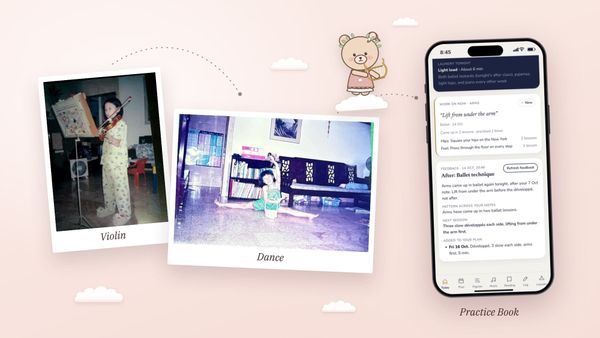
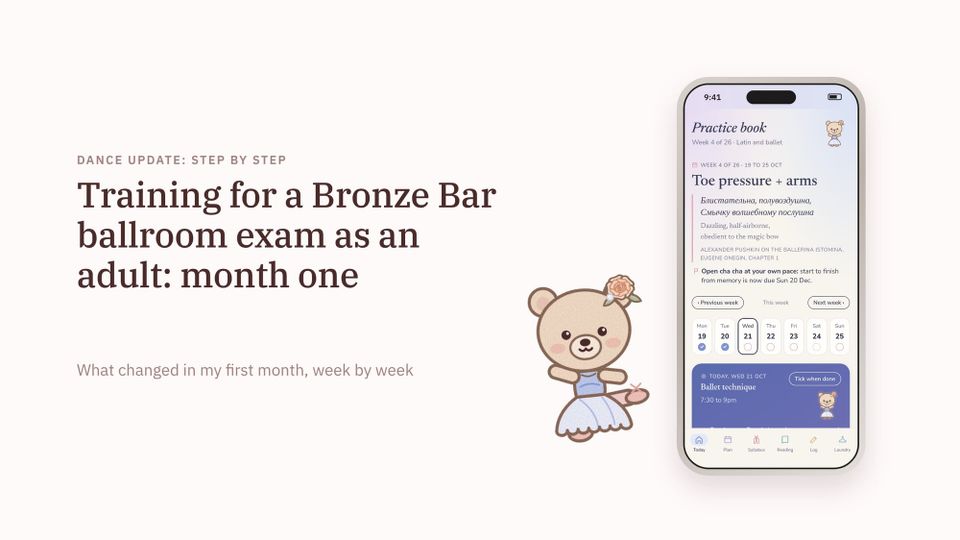
It's all done with the help of my Practice Book, a Claude Artifact. It contains my plan, my practice and my teachers' corrections.
It's also helped me enjoy the process more.
What changed this month
Figures and routines
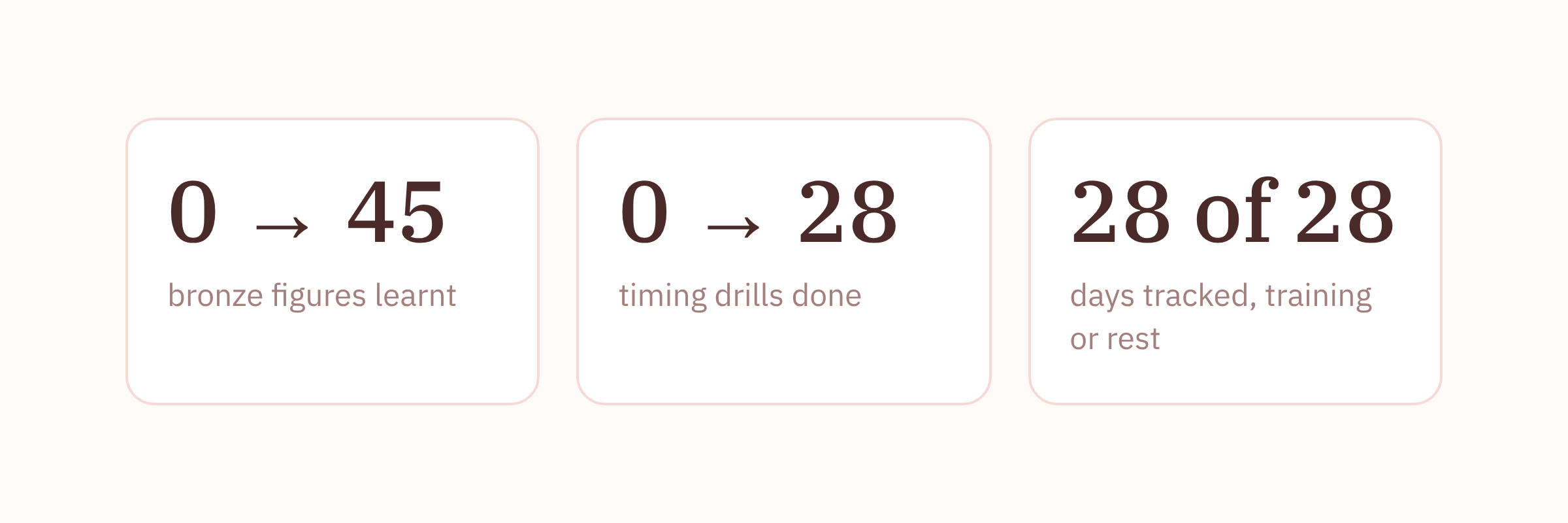
On 28 September, I hadn't ticked a single bronze figure.
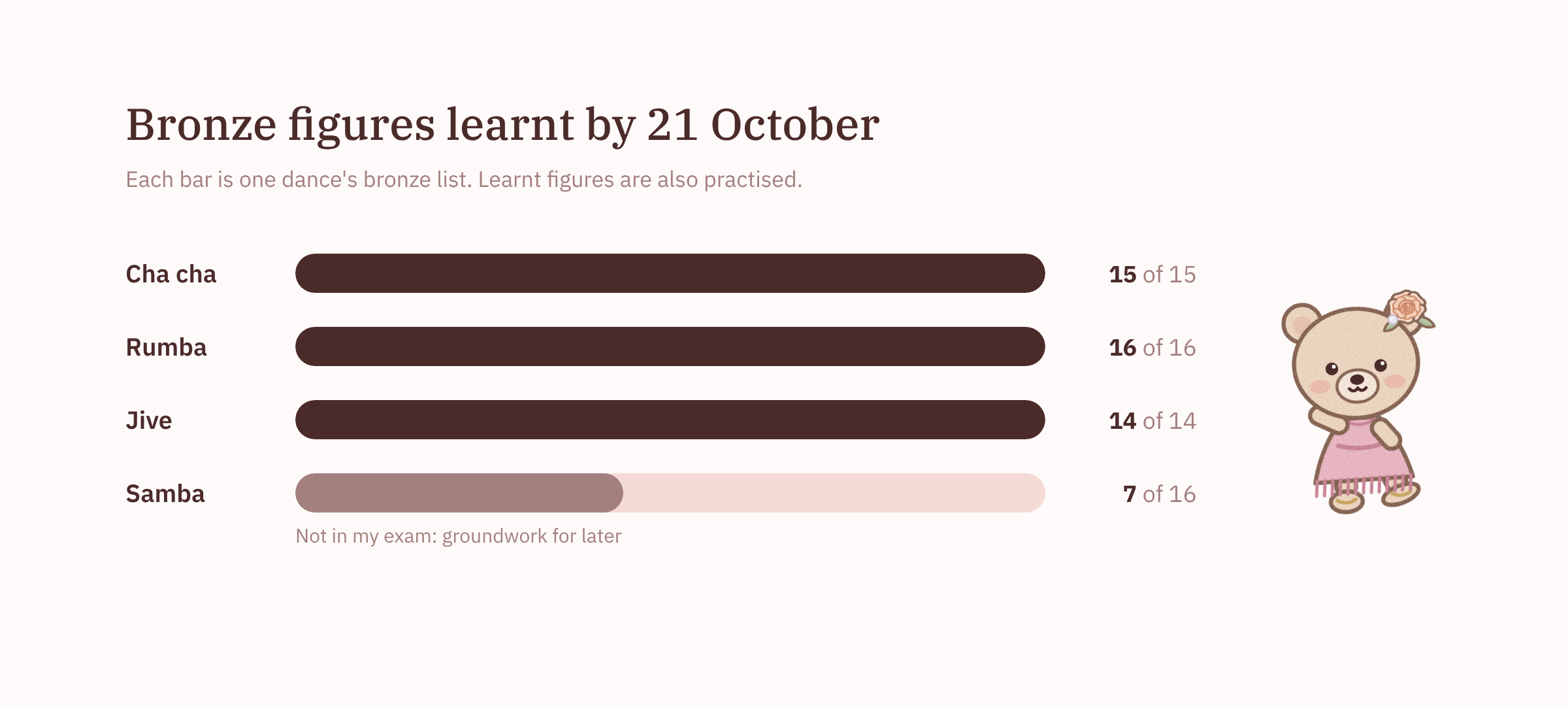
By 21 October, I'd ticked all 45 as learnt and practised: 15 in cha cha, 16 in rumba and 14 in jive.
The day before, I'd finished learning my bronze and bronze bar cha-cha, rumba, and jive routines with my teacher.
Timing
After my September competition, I wanted to keep better time. So I started timing drills on 28 September, and finished all 28 on 21 October.
Ballet
I started two 10-week courses. Pre-pointe is on Mondays, starting 19 October. A physio checks whether I'm ready in weeks 9 and 10, and I can start pointe work if I'm cleared.
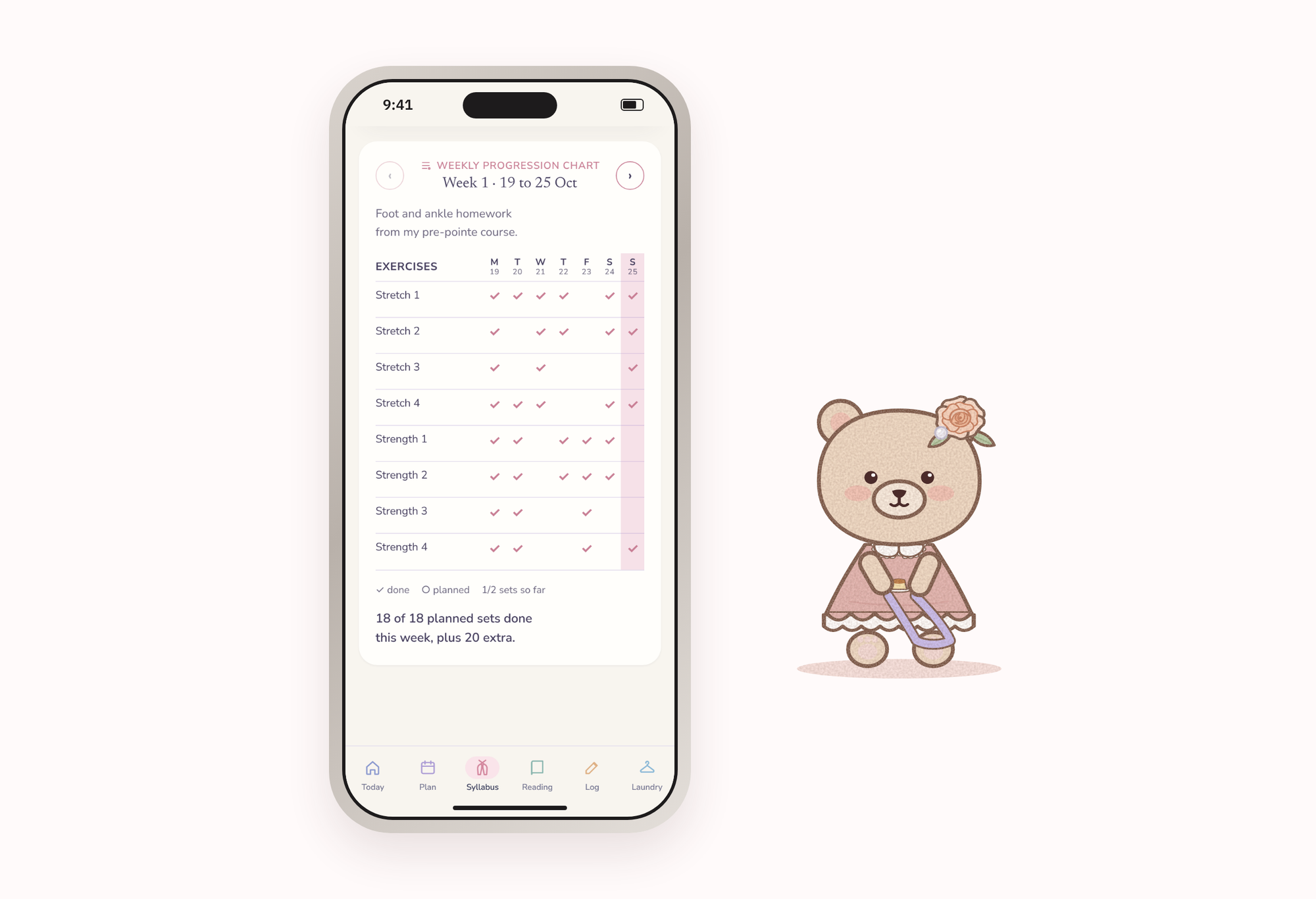
I've done some of the homework every day so far. Then on 21 October, a new technique term started on Wednesdays, with steps like chaînés and posé pirouettes.
What my teacher said
At my private lesson on 25 October, my teacher said everything looked much better. My jive had improved too, especially my weight placement and feel.
What helped
I bet schools do this systematically all the time, with a syllabus, a plan and rubrics. I'm just applying the same idea to dance, and it actually works to build learning and volume!
What I need is to sit down and focus on the exercise properly. Without a written structure or plan, it's easy to get overwhelmed.
With the planning out of the way, I can focus on the practice itself, get everything done and still revise in time. It's even given me room to think about the Standard Ballroom exam.
The Practice Book also helps me decide what to practise next. "Today" shows the session and the correction to work on first.
After class, a quick check-in asks which corrections improved, so the next session picks up where the last one left off. For example, when my samba walk still needed work on 25 October, the practice book added a few minutes of samba walks to my Tuesday practice.
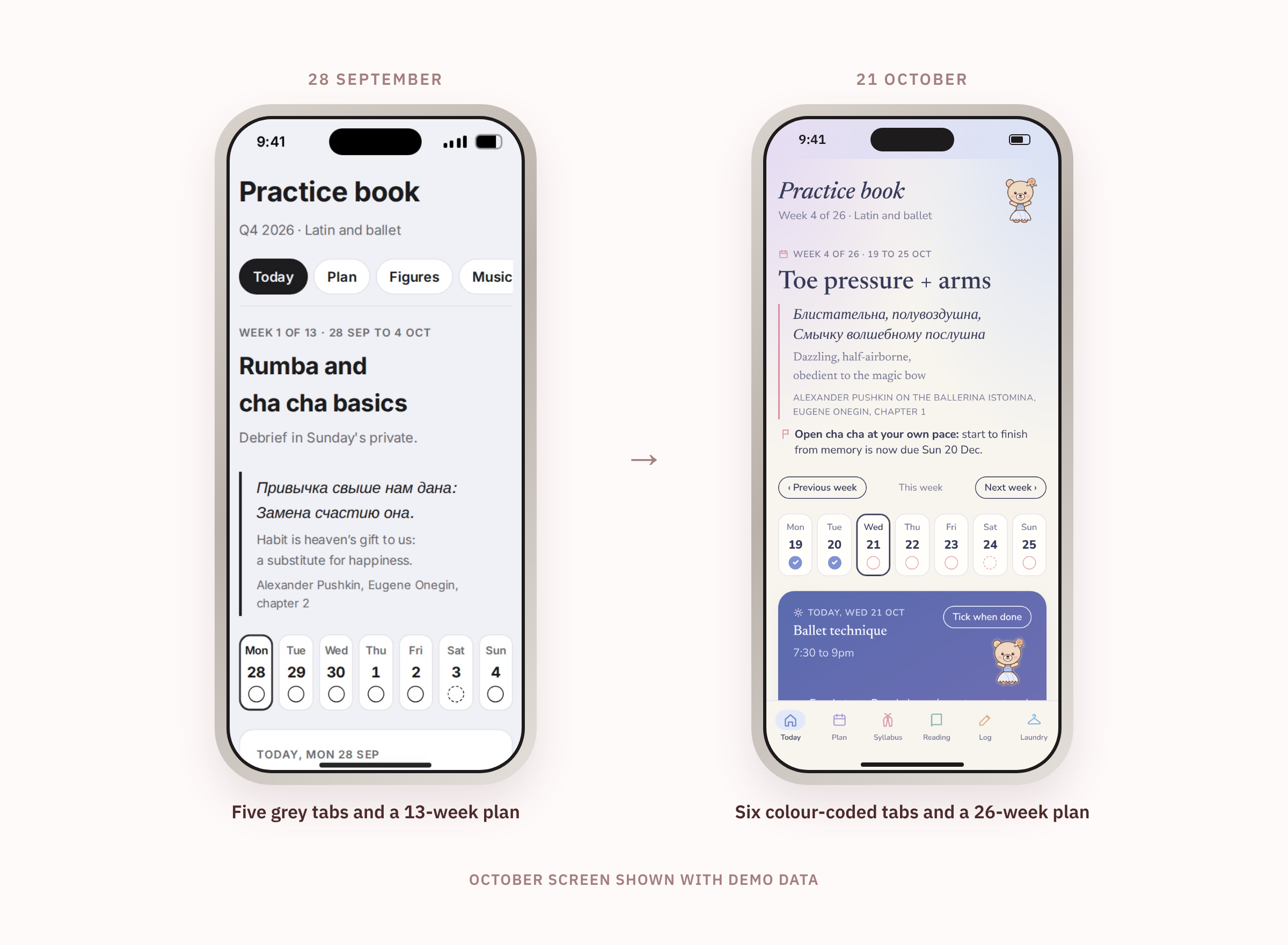
It's changed a lot since the first version on 28 September:
My progress log
Week 1: 28 September to 4 October
The plan started with my first timing drills and my first reading. On 4 October, my teacher and I confirmed my exam and agreed the plan, and I learnt an open cha cha routine.
Week 2: 5 to 11 October
I took three rest days. I got four ballet corrections on 7 October, and on 11 October, corrections on my samba walk, bounce and head direction.
Week 3: 12 to 18 October
Three rest days. I read about dance on 15 October, and on 18 October, I wrote that my samba walk "is improving".
Week 4: 19 to 25 October - progress!
Pre-pointe and the new ballet term both started. I finished learning my routines on 20 October and ticked every exam figure on 21 October.
On 25 October, my teacher said everything looked much better. I filmed two clips that day, so I can compare them with new ones at my private on 8 November.
What's next
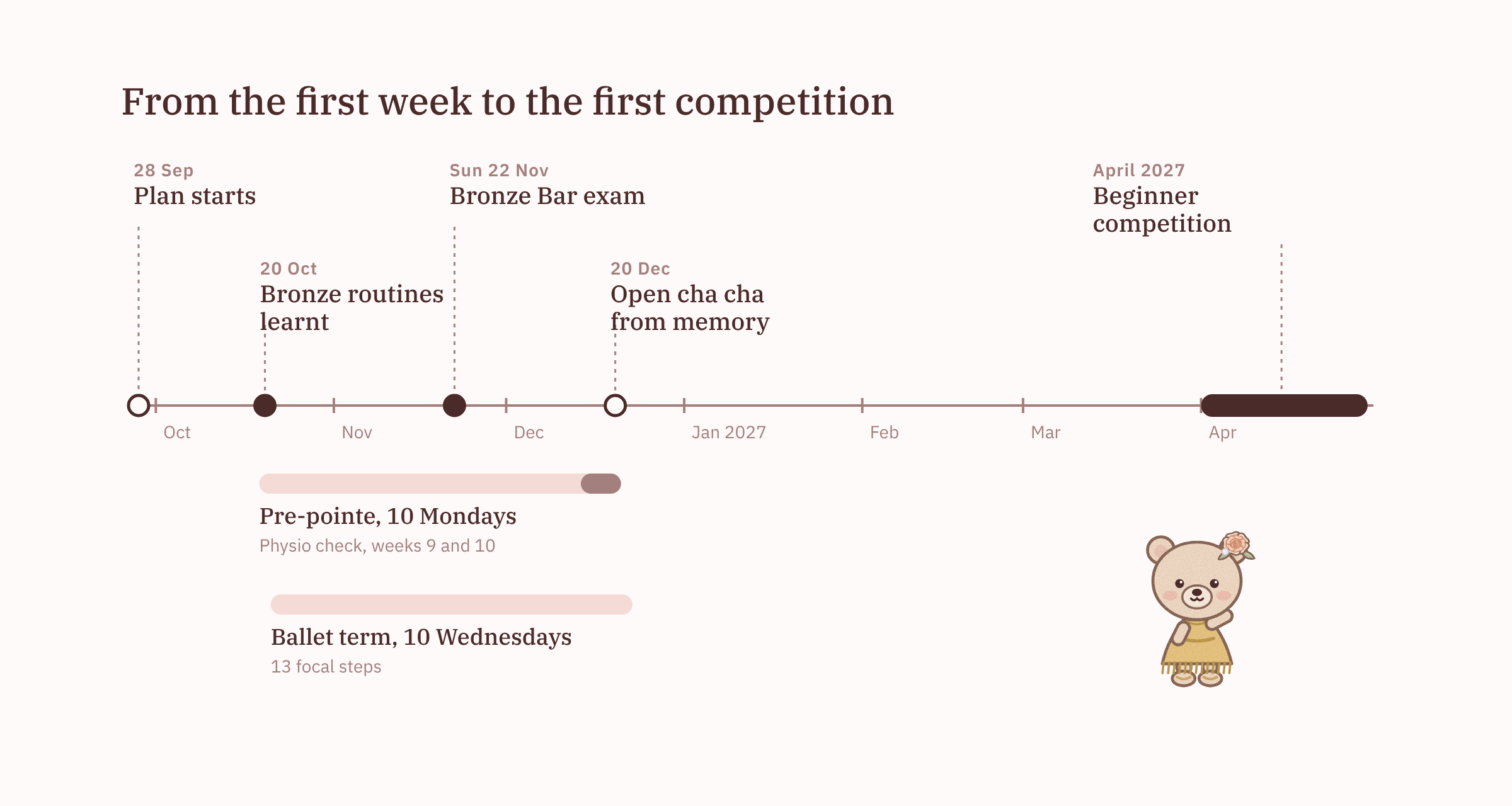
The next few months will bring two exams, more training and hopefully a few more small improvements. I'm looking forward to them.
Step by step. Enjoy the process. And celebrate the progress!