What violin taught me about learning dance as an adult
What violin taught me about getting the most out of limited practice time, and the system I built to find insights faster while learning Latin and ballet in my thirties.
Now in my thirties, I'm learning Latin and ballet seriously while working full-time.
I have far fewer hours than I did as a child, so I can't get better by practising more. I get better by understanding more. That has to come from insight.
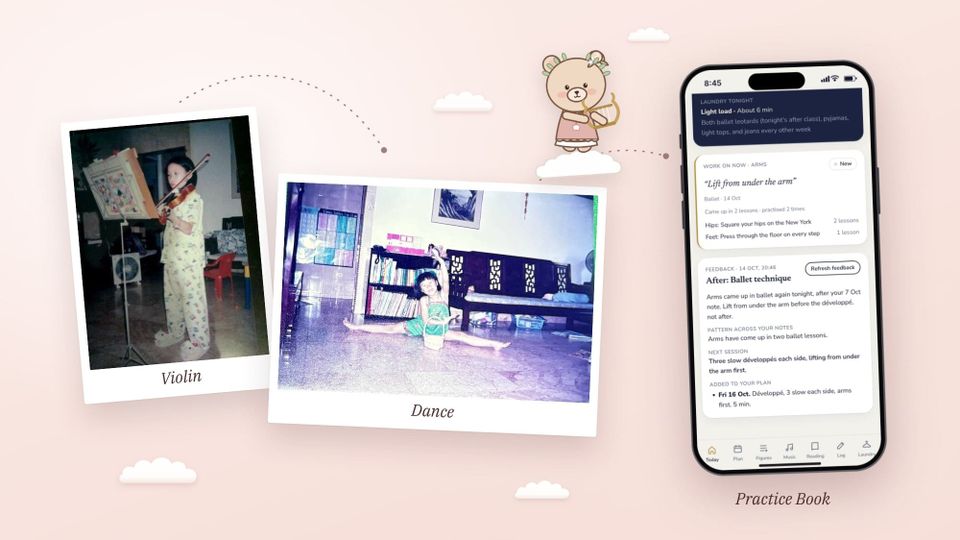
I spent most of my childhood practising the violin. The violin showed me how practice could improve, so I built a tool in Claude around what I'd learned to help me with dance. The tool remembers my corrections and points out patterns in my training, so I can push myself and find personalised insights faster.
Read on for my story, the tracker and how to try it yourself.
Passing Grade 8 without a plan
As a teenager, I passed Grade 8 with ABRSM, the UK music exam board many Singapore students take.
It was a real stretch for me. I recall finding the scales very demanding, and Beethoven: Violin Sonata No. 5 in F major, Op. 24, challenging to play well.
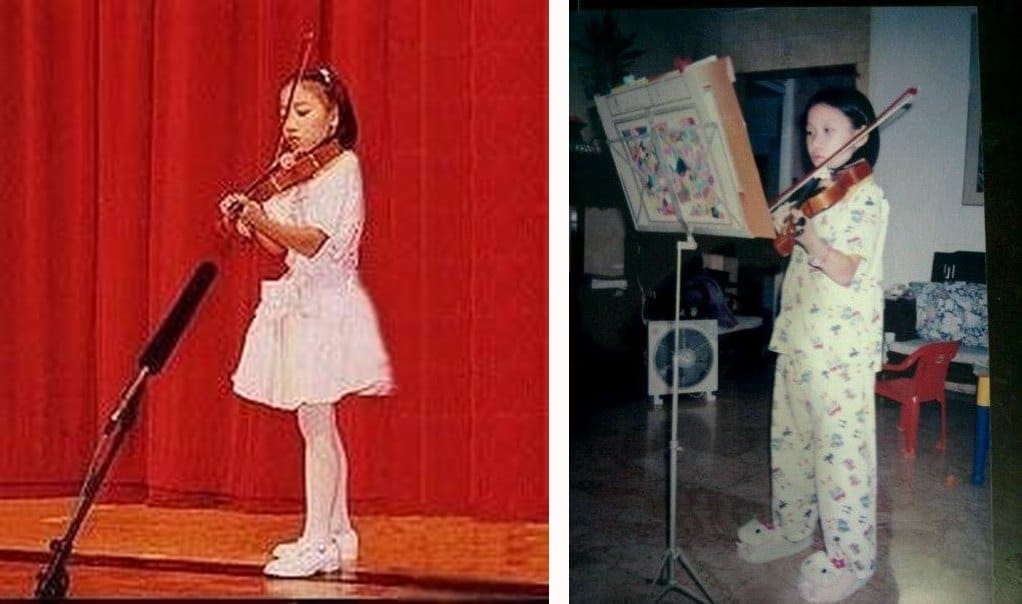
I got there through hours of practice: lots of pieces, lots of scales, and a bit of luck. I had no plan, and followed what people around me valued: performances first, fundamentals second.
By Grade 8, I'd become so focused on exams that I was practising more out of guilt than intention. Somewhere along the way, I'd lost sight of why I'd started: to enjoy music, savour it, and deepen my understanding.
After the exam, I stopped playing in my late teens, though I always hoped to return to it seriously someday.
What heartbreak with the violin taught me
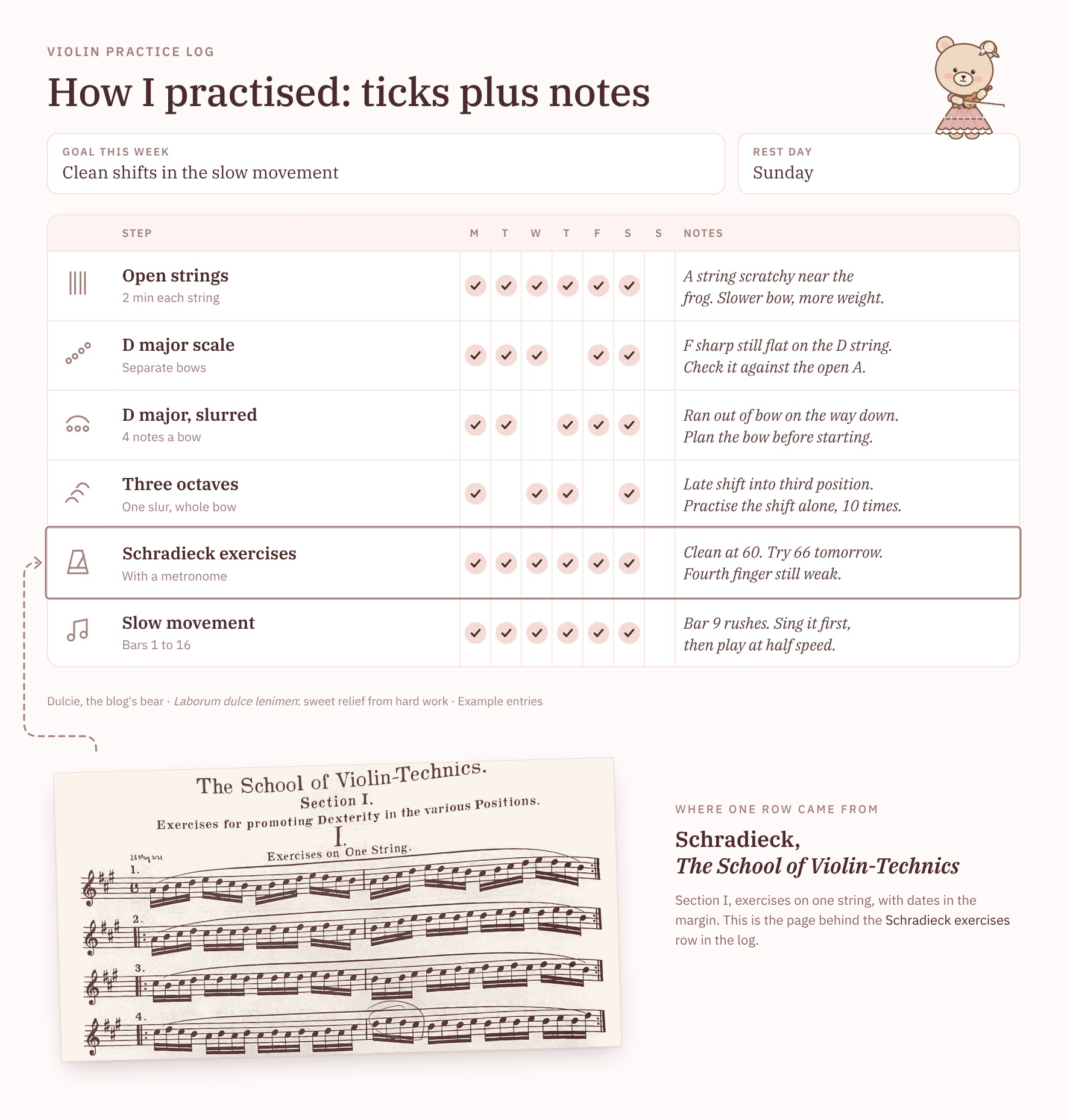
As an adult, I returned to the violin to attempt the diploma. I took this very seriously. This time, I wanted to build a solid foundation. I restarted with Schradieck's The School of Violin-Technics, a classic book of finger exercises.
I always practised in the same order, from open strings to the piece, and with a metronome. I ticked off each step and diligently noted what went wrong.
After some months, I began to really struggle:
- Finding somewhere to practise was difficult or expensive. I worried constantly about making too much noise and disturbing my neighbours.
- Then, my neck and shoulders started to hurt.
- Between work, studying and paying for lessons, it felt like taking on another degree. I was getting burnt out.
- Lessons were really expensive, and progressing further would mean endless lessons.
I still couldn't play the pieces I wanted to or work through technical problems on my own. Improving further, let alone earning a diploma, would take more money, time and guidance than I could commit to.
So I accepted that this had to end. I'd given it my best shot so far! I booked a studio photo shoot with the violin I'd rented for my lessons, just to say goodbye.
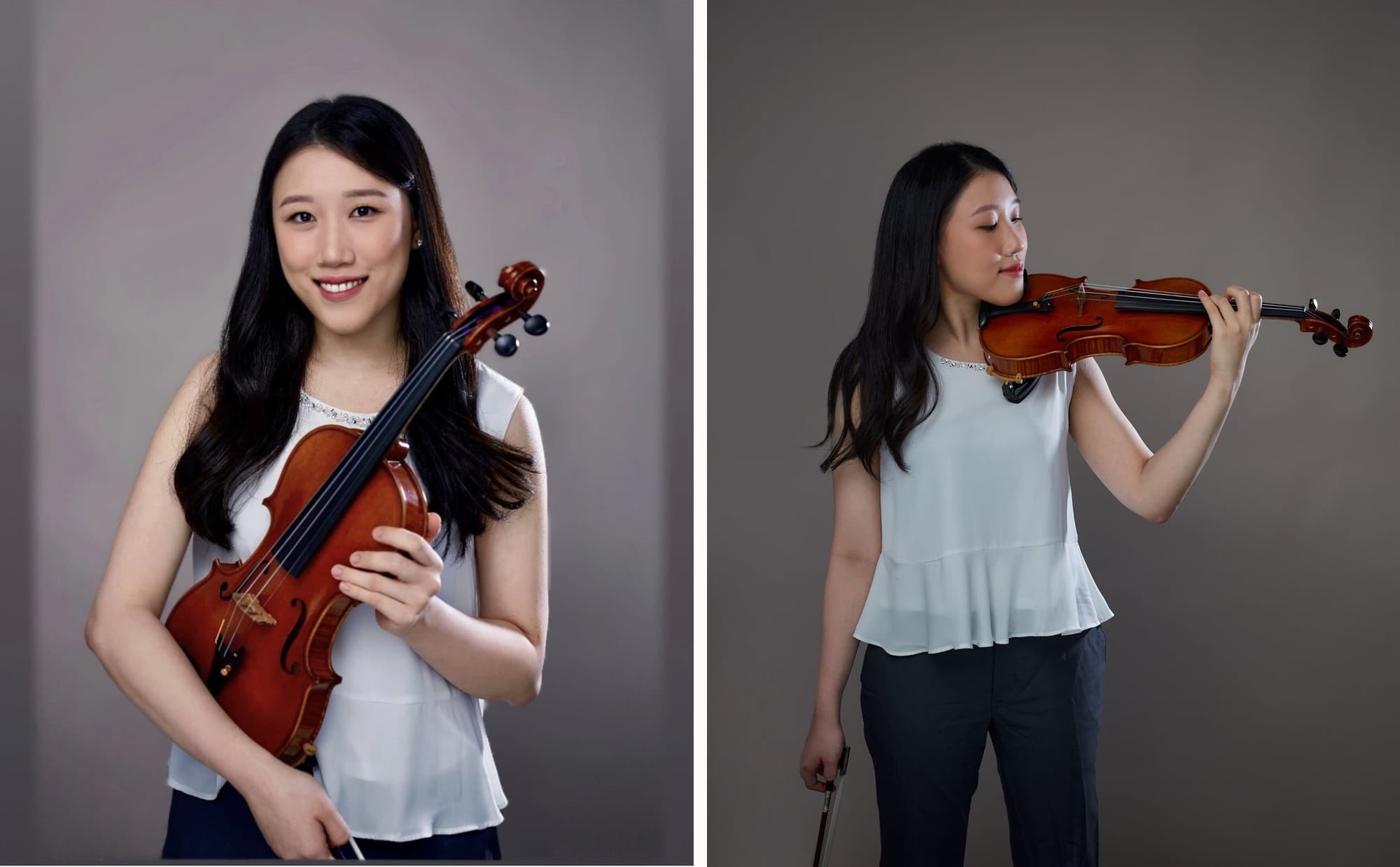
Some kids are overjoyed when their parents finally let them stop music lessons. But when I stopped playing the violin for good, I was truly heartbroken. I deliberately avoided listening to violin music for the next five years.
A new beginning
I didn't know it then, but leaving the violin behind would eventually make room for something else I thought I had quit for life.
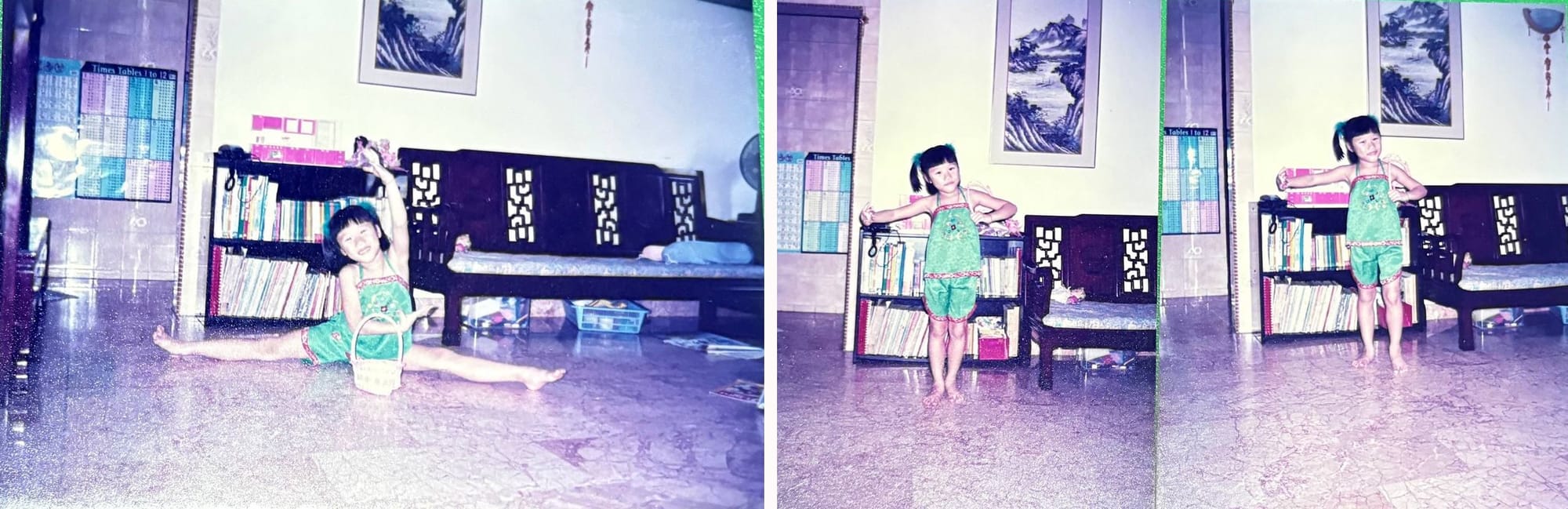
I was always smitten with dance, but I treated it as a recreational hobby.
I was once cut from a dance performance. I felt like I was swimming upstream, so I decided to drop it and focus on my studies instead (more in Why I dance).
Another side lesson: For a long time, I felt ashamed of having hobbies. I'd grown up believing that to be good at something, you had to focus exclusively.
Over time, I began to question that belief, especially for arts and sports. Learning different dance styles, for example, can help us become more versatile dancers. I also learnt that Hilary Hahn, one of the world's leading violinists, studied ballet growing up and continued taking occasional classes as an adult. She's also spoken about the connections between different art forms.
Ballroom, by chance
In January 2023, I was completely sedentary and wanted to be fitter. My neck and shoulders were constantly uncomfortable too.
After years of failed fitness attempts, I took a gentler approach: setting modest monthly goals and sticking to only the exercise I enjoyed, like the stair climber.
I gradually worked my way up to an hour a day without holding the handles. About 18 months later, my fitness and balance had improved far more than expected. Even my neck and shoulder pain had disappeared. Thus, I learnt to set modest goals and consistently do activities I enjoy.
The practice tracker
Around April 2024, I booked four ballroom lessons as a fun way to reach my daily step goal. Those four lessons led me to Latin dance, and eventually back to Pilates and ballet. (More in Stumbling back into the studio.)
I never expected to take dance this seriously. This time, I'm more grateful and enjoy the process more. Returning to a childhood delight, getting stronger, and seeing progress has been such a gift. I'm still keen to improve and push myself, but with far less stress and much more fun.
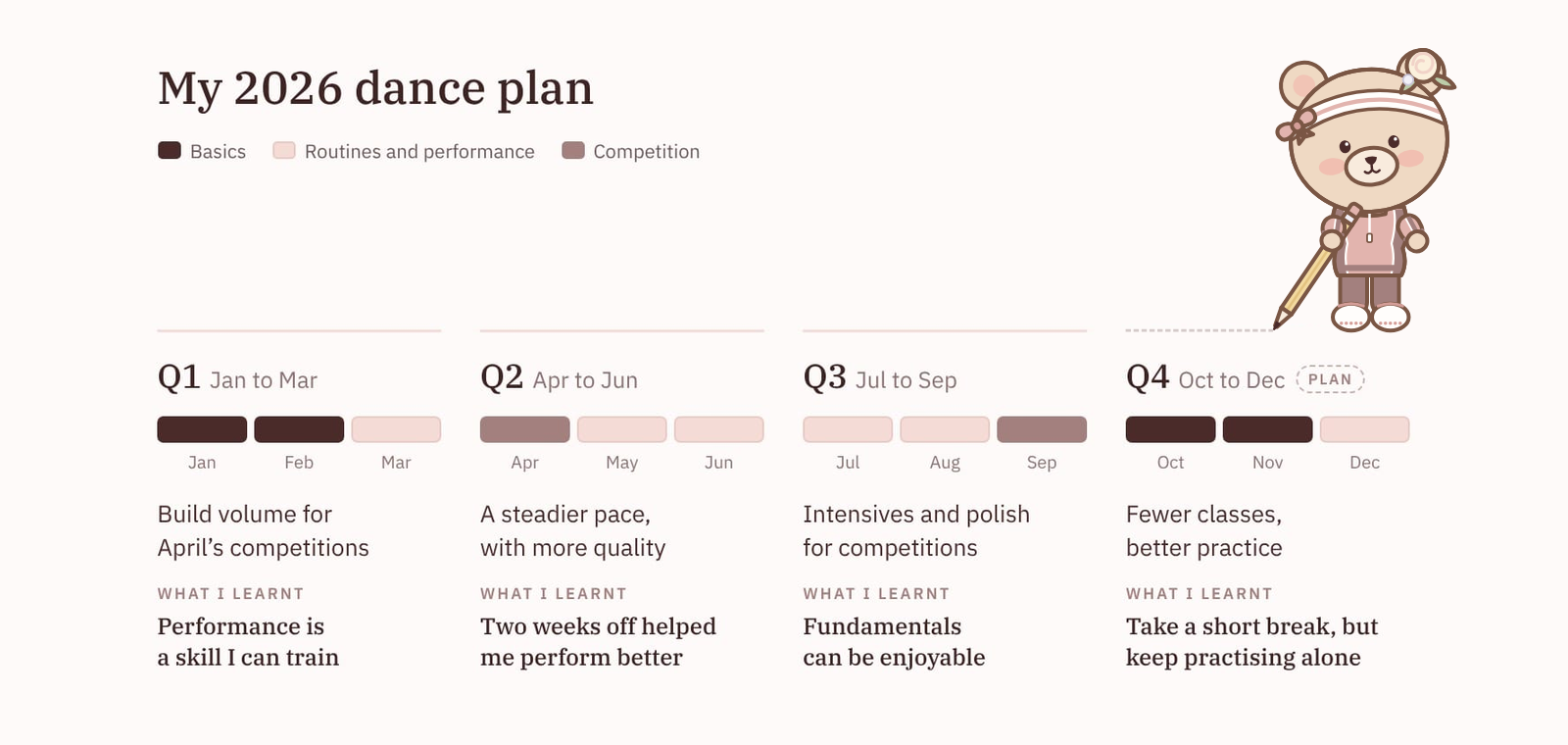
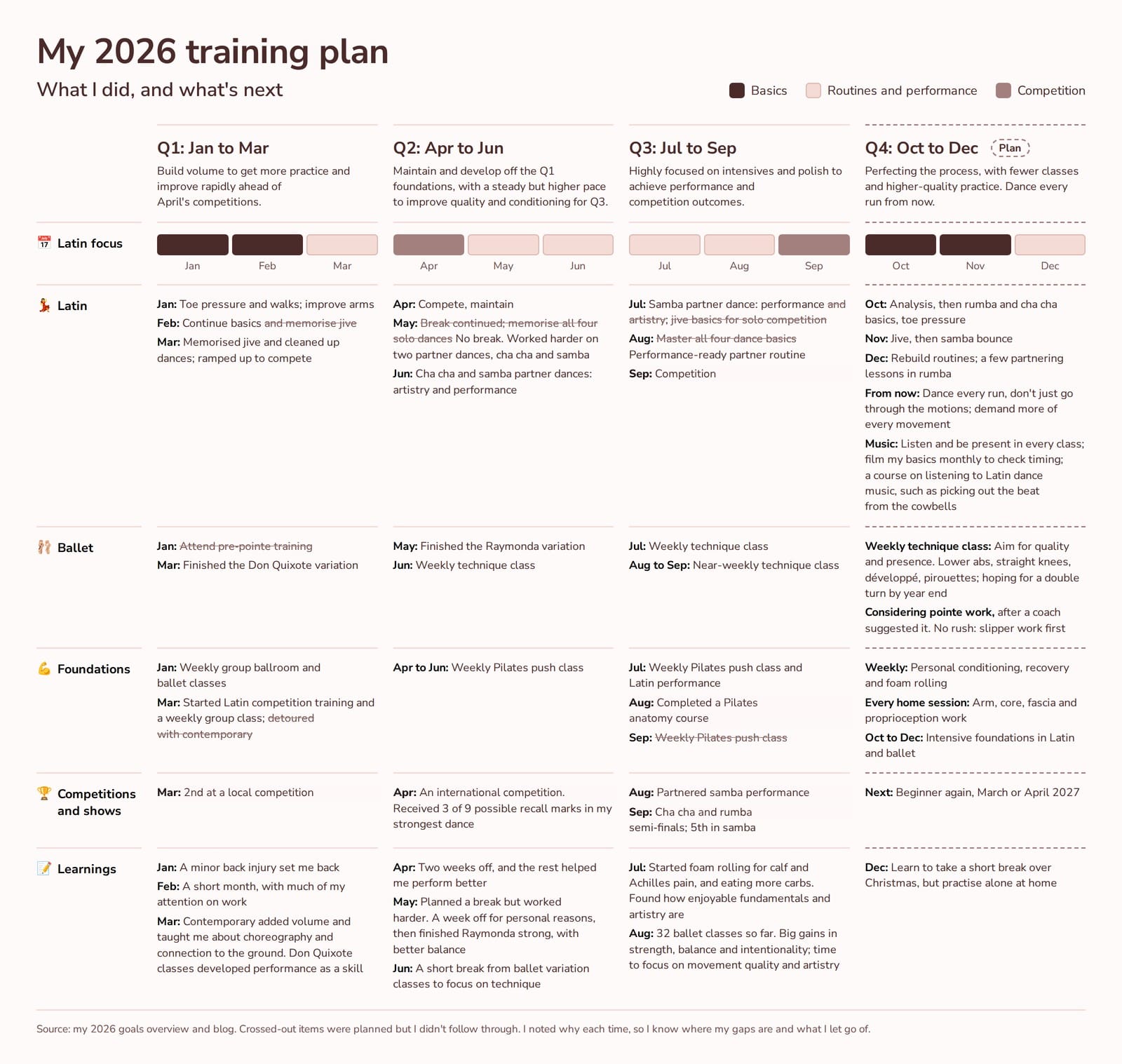
I plan my dance year like a work project: start with the goal, work backwards, and review every quarter:
Building my Practice Book
Next, I wanted a clear weekly practice schedule, which my quarterly plan couldn't provide. There will always be reasons not to practise, so I prefer to plan each week in advance. This cuts down on admin, frees up headspace and gives me a structure that makes it easier to stay consistent.
I didn't write any code. I just described what I needed, and Claude created the initial artifact.
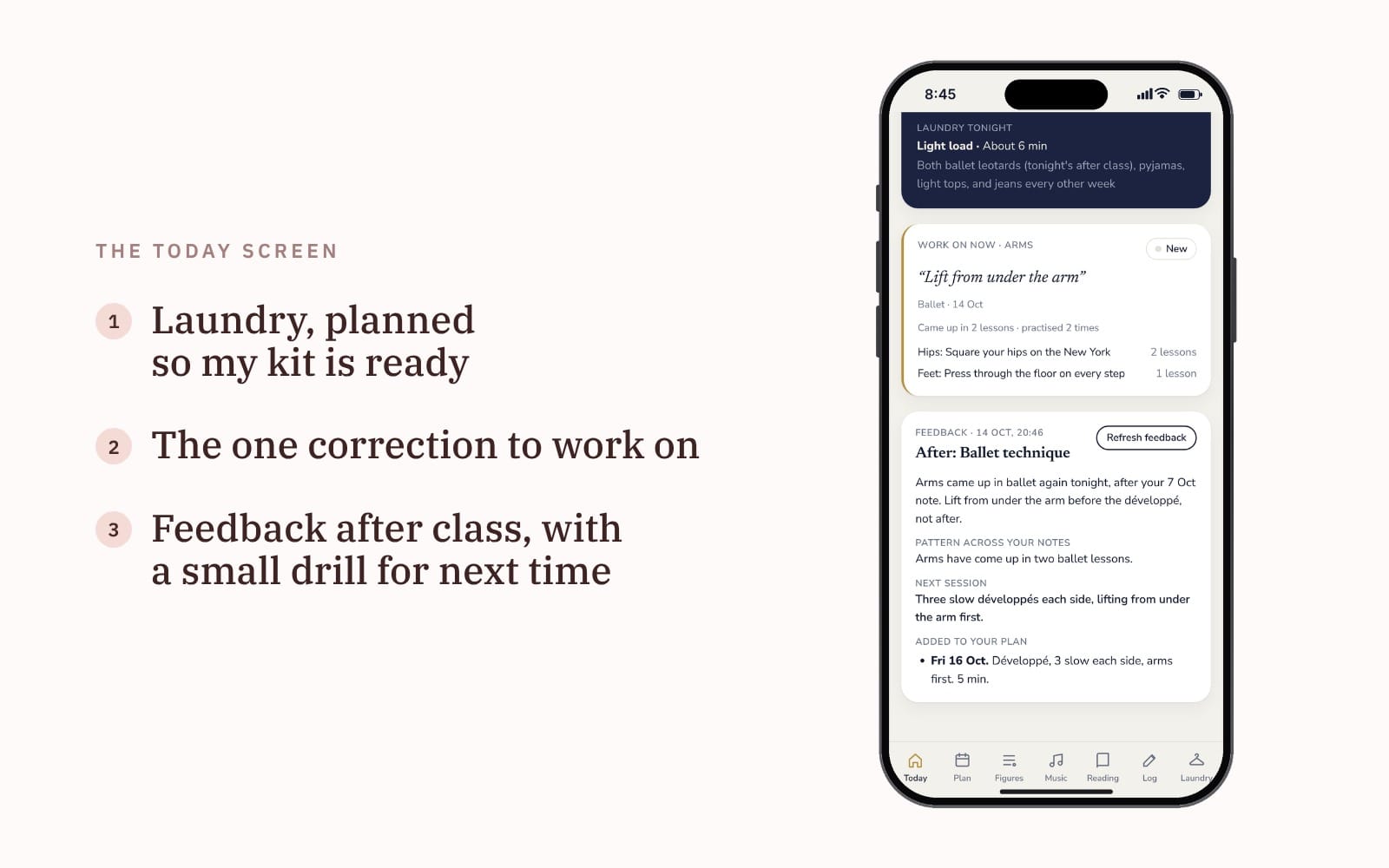
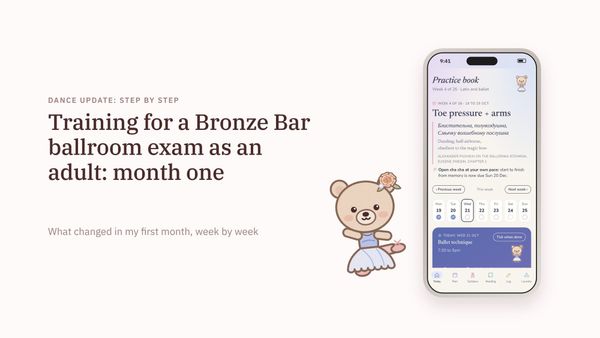
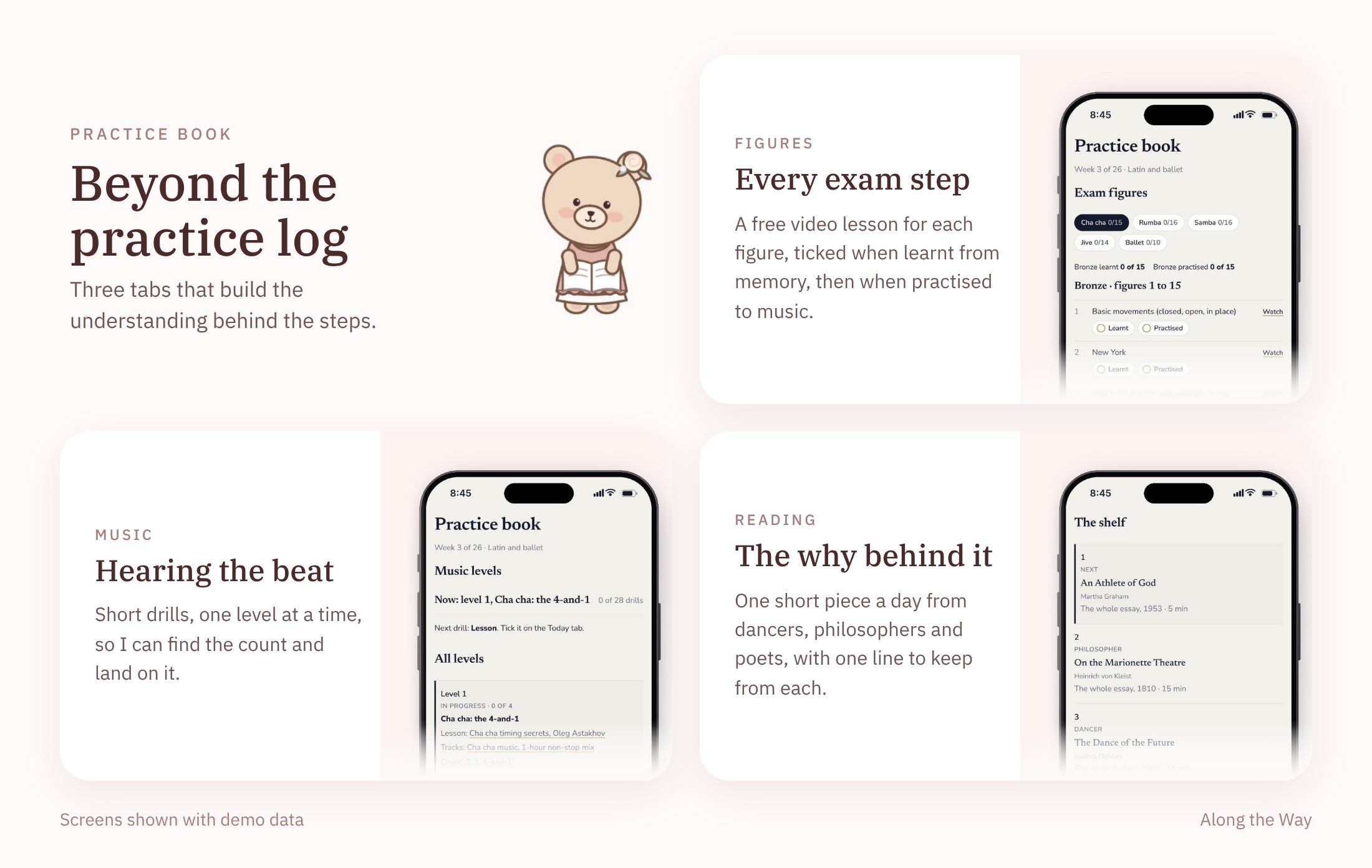
Practice Book in Claude helps to strengthen my foundations, support practice plans, and supplement my learning. It keeps all my teachers' corrections, notes, and post-class check-ins in one place, and flags the corrections that keep coming back.
With limited time as an adult, these regular reviews help me learn more effectively by identifying patterns/insights and understanding what works.
How it works
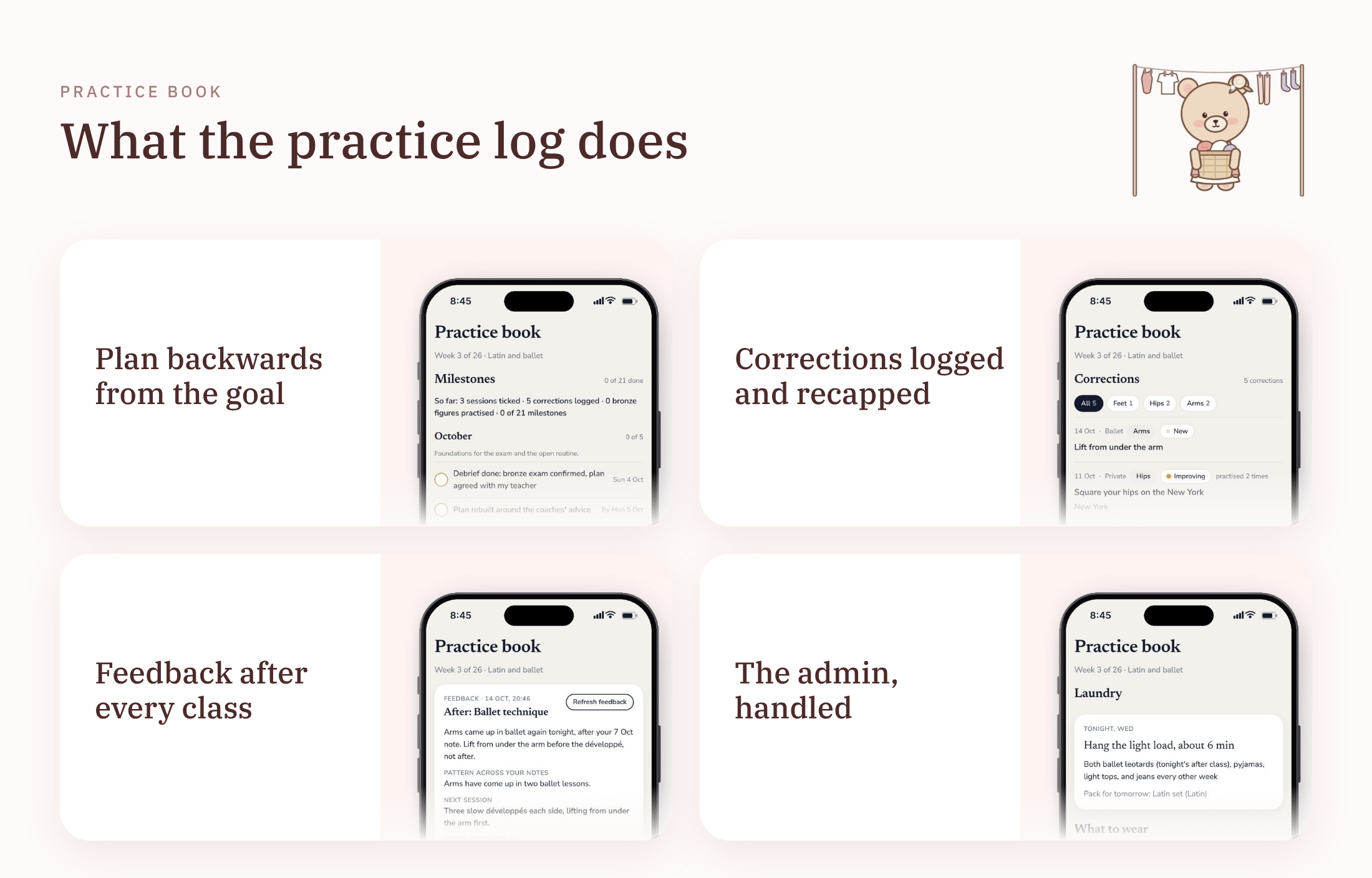
Each day starts on the Today screen: the session, the correction I'm working on, and a check-in after class. I can't match the hours of dancers who started as children, so the aim is to learn more from each hour I do have.
Practice Book doesn't give me shortcuts. It makes sure I can practise and think. I have to do the parts where the learning happens: pay attention in class, revise my notes before the next session, and mark my own progress.
Extra tabs feed into the daily and weekly check-ins and supplement the learning:
- Figures tab tracks if I have learnt each exam step.
- Music tab trains my ear systematically.
- Reading tab: I'm recommended one short piece a day from dancers, philosophers, and poets, to learn meaning and context. Each reading ends with a reflection task: share a line that made me stop, and write what it means for my dancing.
Paying for dance
Lessons and experiences cost money, as I learnt painfully through violin. This time, I want to be better prepared, even if facing the numbers honestly still takes courage. Before committing to dance lessons or considering international competitions, I used Claude to build a retirement plan and work out what I could afford.
Thankfully, I've found that improving at dance doesn't always mean spending more money. Much of the progress comes from consistent practice, with the added benefit of better health!
What's changed so far
To start, Practice Book frees up my headspace for practice and learning. I just check my phone and do the exercises tailored to my quarterly goals.
Then, logging notes can surface recurring patterns in my corrections, like toe pressure, core engagement, and lat engagement. AI is good at spotting and analysing these patterns.
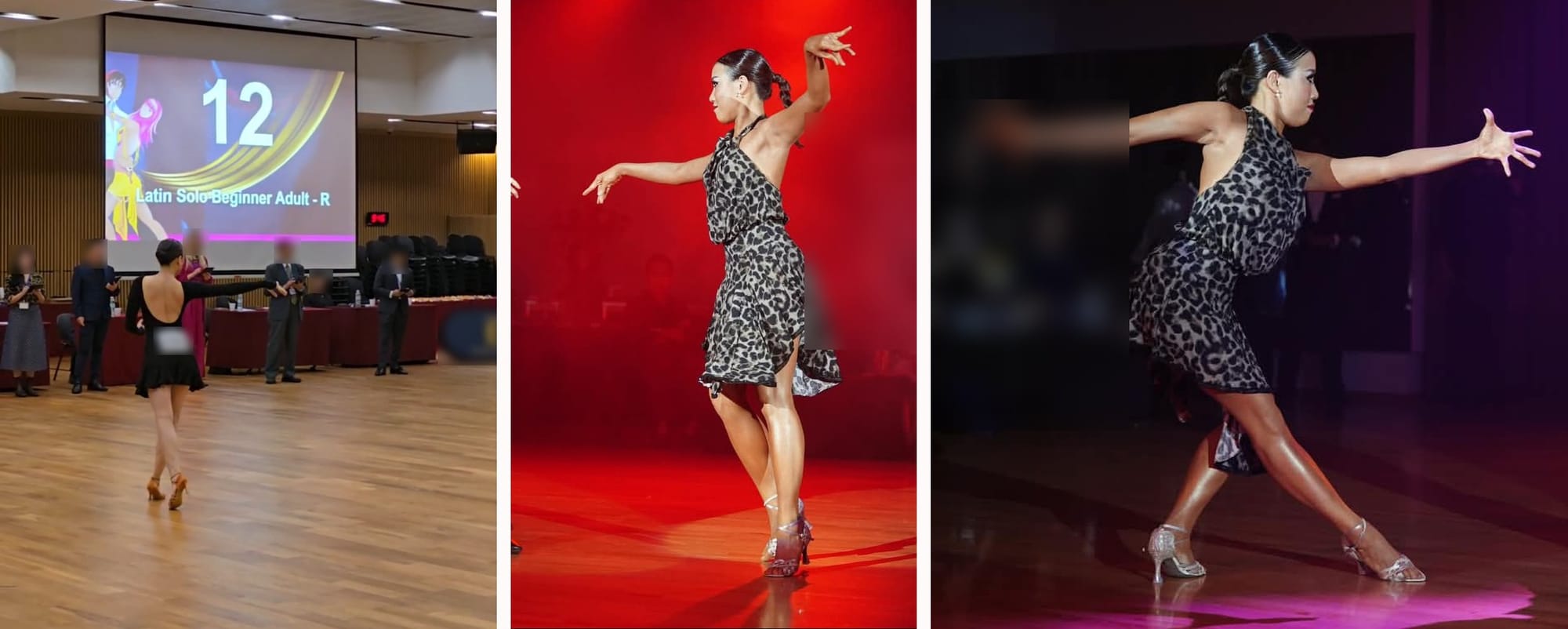
I can also compare videos of my dancing with professional performances, then check what AI found with my teachers (more in How I used AI to study my dancing).
With this system in place, I'm more focused in class because I know which correction I'm working on or what my lesson plan is.
Try it yourself
Five tips to create a supportive learning system for dance or music:
- Write down your teacher's correction straight after the lesson
- Work on one correction at a time, and mark progress after each practice
- Put a date on your goal and plan backwards to this week
- Find the chore that eats your practice time and solve what you can
- Work out what it costs before you commit
Build your own tracker
You don't need to code; this approach works for any skill. Paste this into Claude and fill in the brackets:
I'm an adult learning [skill], with about [hours] a week to practise.
My goal is [goal] by [date].

Build me a simple practice tracker as an artifact I can use on my phone:
- A Today screen with the session and the one correction to work on
- A week-by-week plan that works back from my goal
- A log of my teacher's corrections, in their words, with a status:
  New, Practising, Improving, Resolved
- A short check-in after each session: did each open correction improve?
- A weekly summary of what improved and what to focus on next
What's next
- Improving the artefact and refining data on my progress
- The bronze bar exams later this year
- My last beginner Latin competition next year
- A regional competition season over the following few years, already budgeted
Violin taught me what I could have done better in my practice, while the stair climber taught me that patient progress matters.
I built Practice Book on those lessons. It helps me track what my teachers have taught me, what I've practised, and where I need to improve. That way, I know what to work on and can focus on dancing consistently.
If you're learning something you love but have fewer hours than you'd like, I hope this helps.
Thanks for reading.
Appendix
My full year's plan
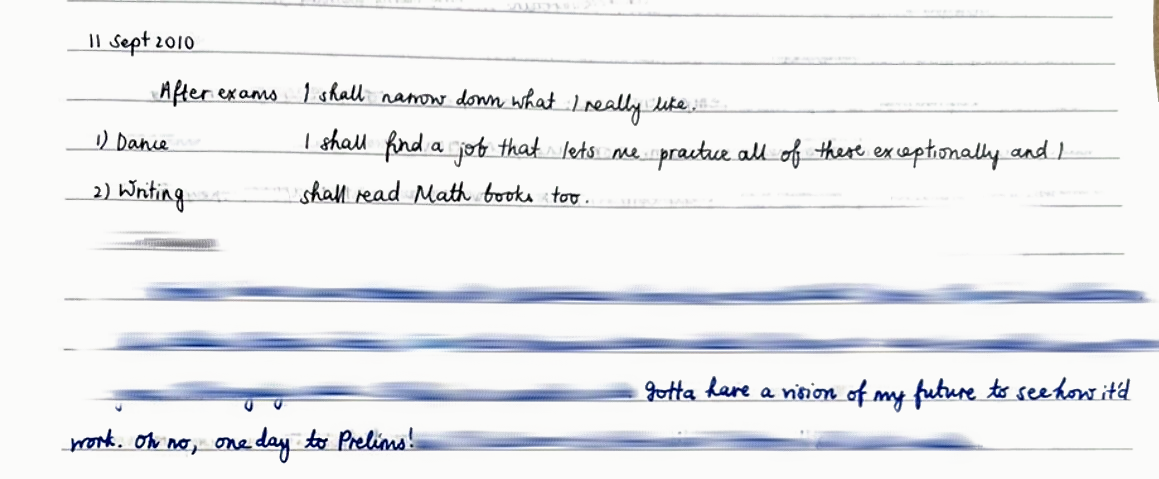
Old diary entry from 2010
In pre-university, I joined the Chinese dance group. I experienced the nuances and beauty of Chinese dance, from classical to folk, and it gave me some techniques to contrast with ballet.
Recently, I came across a journal entry I'd written in 2010, the day before my mock exams. I'd written about how much I loved dance and writing. Finding it again was a lovely surprise. Here I am, still writing and dancing!