Noticing the water: A season in dance
Paying attention to a season in Latin ballroom, from technical gaps and competition results to what actually improved, what didn’t, and what I’ll do next.


I’ve always wanted to be more involved in dance, especially ballet, so I decided to give it another go.
I had participated in my first Latin ballroom competition in September 2025. Looking back, I lacked strength, and my sternum collapsed. I wasn’t even sweating after two rounds.
I continued to train. The months in between were intense, with Work (with a capital W), holidays, healing, and short spurts of progress.
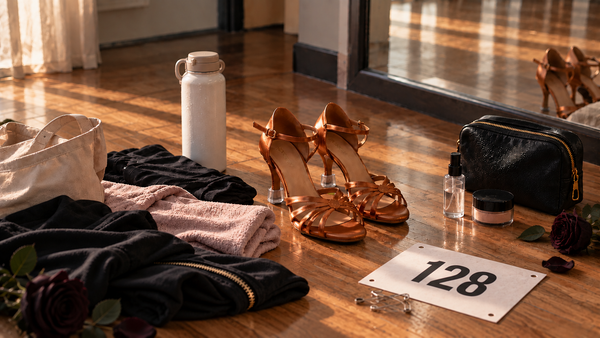
Fast forward to April 2026, and I’ve completed another competition.
But my improvement was not enough. Out of 9 judges, only 3 wanted to see me back for my strongest dance.(1)
Calibrating progress
The next day after the competition, I was back at the studio. I practised the cha-cha, trying to put more energy into it, until I was worried about injury.
At the lesson, my coach, who had also competed the day before, asked: “How do you think you danced during the competition?”
I found that helpful. It shifted the focus from just improving to calibrating my progress.
My competitors had improved too. They were better that day. They had made more progress.
I was disappointed. The best I could muster wasn’t enough.
Still, I’m curious and looking forward to the next phase of practice. As Alysa Liu said, “What is there to lose? Every second you are there, you are gaining something.” Now I need to work towards her mindset, though: “I can’t think of anything that I would find stressful or anything that could bring me down.”
Practical competition tip: How to warm up
Later, another coach asked me too: “How do you think it went?”
Me: “I was nervous. My feet didn’t work well. My toe pressure was off.”
She looked at me straight and said, “No one taught me this." She had to find it out herself. So, I was very grateful that she taught me this. (Thank you, teachers.)
"You need to get your heart rate up to your target heart rate at least three times within the hour before your first event.
“Once your heart rate is up and you’ve sweated a bit, that nervousness is replaced by adrenaline, which is a good thing.
“Your body needs to wake up. Your legs need to be told in a way your muscles can understand.”
That made sense. I wasn’t warm enough to get that explosiveness and connection from mind to toes. If I were, I probably wouldn’t feel the nerves. My legs wouldn’t feel as heavy. I should probably have a sheen of sweat before stepping out.(2)
She waved her hand. “At your age, you should be dancing your best by round three. If you’re tired by then, you’re just unfit.
“None of that ‘aww it’s fine, you look great’ nonsense. I give you a real tip.”
Recovering my spark
On Sunday evening, I spent my recovery on the sofa, browsing YouTube.
I discovered MMA fighter Georges St-Pierre and picked up some ideas about sports psychology.
I rewatched Soul:
“We come back tomorrow night and do it all again.”
“So, uh, what happens next?”
“We come back tomorrow night and do it all again.”
And also the story about the fish, told by Dorothea Williams.
“I heard this story about a fish. He swims up to this older fish and says, ‘I’m trying to find this thing they call the ocean.’
“‘The ocean?’ says the older fish. ‘That's what you’re in right now.’
“‘This?’ says young fish. ‘This is water. What I want is the ocean.’”
“See you tomorrow.”
Gains and gaps
I successfully danced through all four dances: cha-cha, samba, rumba, jive. On top of that, I improved my posture and awareness.
I was happy with my time management. I explored different styles, especially ballet, conditioned myself, and cut what wasn’t needed. This led to a pleasant surprise where I placed 2nd in a competition.
And I learnt from my mistakes, like my “choke points” and how to work through them.
I also experienced that rest (for active and passive recovery) leads to clear progress.
Areas of improvement
At the same time, there is still a clear gap in my toe pressure. I knew this in Q1, but it didn’t improve.
Next, my stress management was off. I reflected on how some dancers manage full-time work alongside demanding rehearsals, often with limited sleep and stress.(3)
There’s a lot I can learn from their professionalism, which I respect and makes dance and the community enjoyable and sustainable.
"This is water"
On the topic of water — the ordinary and the invisible — I’ll end with This is Water by David Foster Wallace.
“It is unimaginably hard to do this, to stay conscious and alive in the adult world day in and day out,” in spite of the tedium.
I'd like to pay attention to what’s really happening, and to participate. In the coming days (for dance):
- Compete again in all four beginner dances, plus Paso Doble
- Port de bras and épaulement: wrists still lack intention
- Pre-dance nerves: step out and go
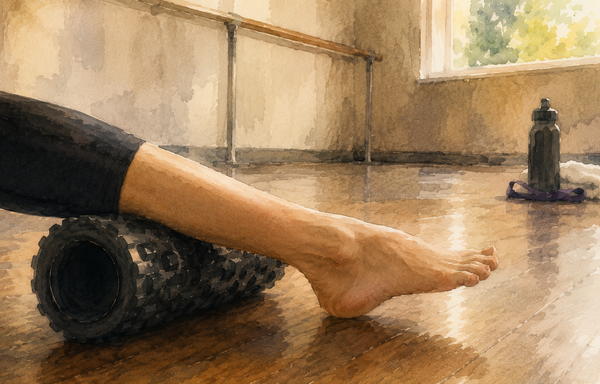
- Keep up with ballet, push more in Pilates, and train more consistently
- Improve turns.
- Manage my diet
- Manage work stress with longer walks, so I can retain choreography
- Be a positive presence (in the studio, especially) consistently
Wherever you go, there you are. It’s all around me. This is the water.
Footnotes
(1) That specific thought weighed on my mind. It’s silly because it’s just a competition, but I felt the worst the two days after. Then, I started to feel a bit better.
(2) “To communicate with your body, speak to it in the way it understands. It needs to know it is time to wake up, so you show it by moving your muscles.” This insight has helped me overcome my morning blues and inertia. Now, I know the urge to stay in bed can be overcome, which is already half the battle won.
These days, I ask myself, “What do I need to do so my body understands?”
But despite knowing these, I do still get insomnia caused by minor anxiety. So I still have room to go.
(3) The unproductive thought process might be, “Obviously, you didn’t want it as badly as them.” But, if I had to replace that with positive and constructive self-talk, it’s more of, “There will be days I don’t feel like turning up. But turning up is a skill too, and I’m proud of paying attention and sticking to my intended practice schedule.”